Why Posture Matters More Than Stretching
Flexibility is not just about muscle length. It depends on how the body is organised, aligned, and controlled during movement. This is where posture becomes essential, and understanding posture helps explain why stretching alone often fails to create lasting results.
For a deeper understanding of posture and alignment, you can also explore this guide on posture and body alignment.
1. What Posture Actually Represents
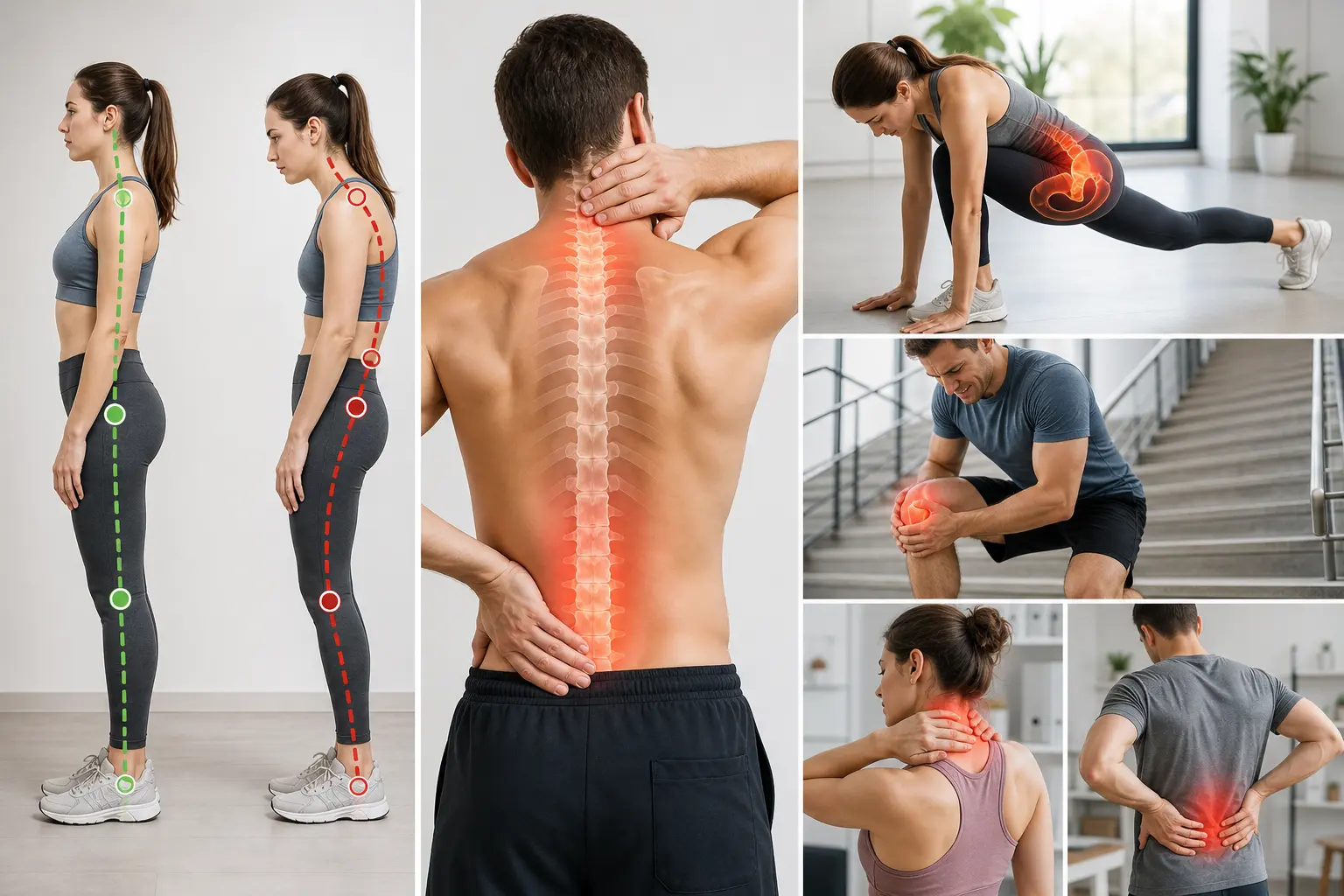
Posture is often misunderstood as simply “standing straight” or “sitting upright.”
In reality, posture reflects two key things:
- How the body is organised against gravity and load
- How each segment of the body aligns in relation to the others
Posture is not static. It is a dynamic system that determines how forces are distributed through the body during movement.
When posture is well organised joints are aligned efficiently, muscles share load appropriately and movement feels stable and controlled.
When posture is not organised well certain joints take more stress than they should, some muscles become overactive and others become weak or inhibited.
This imbalance directly affects how the body moves and responds to exercise.
2. The Spine as the Central Structure
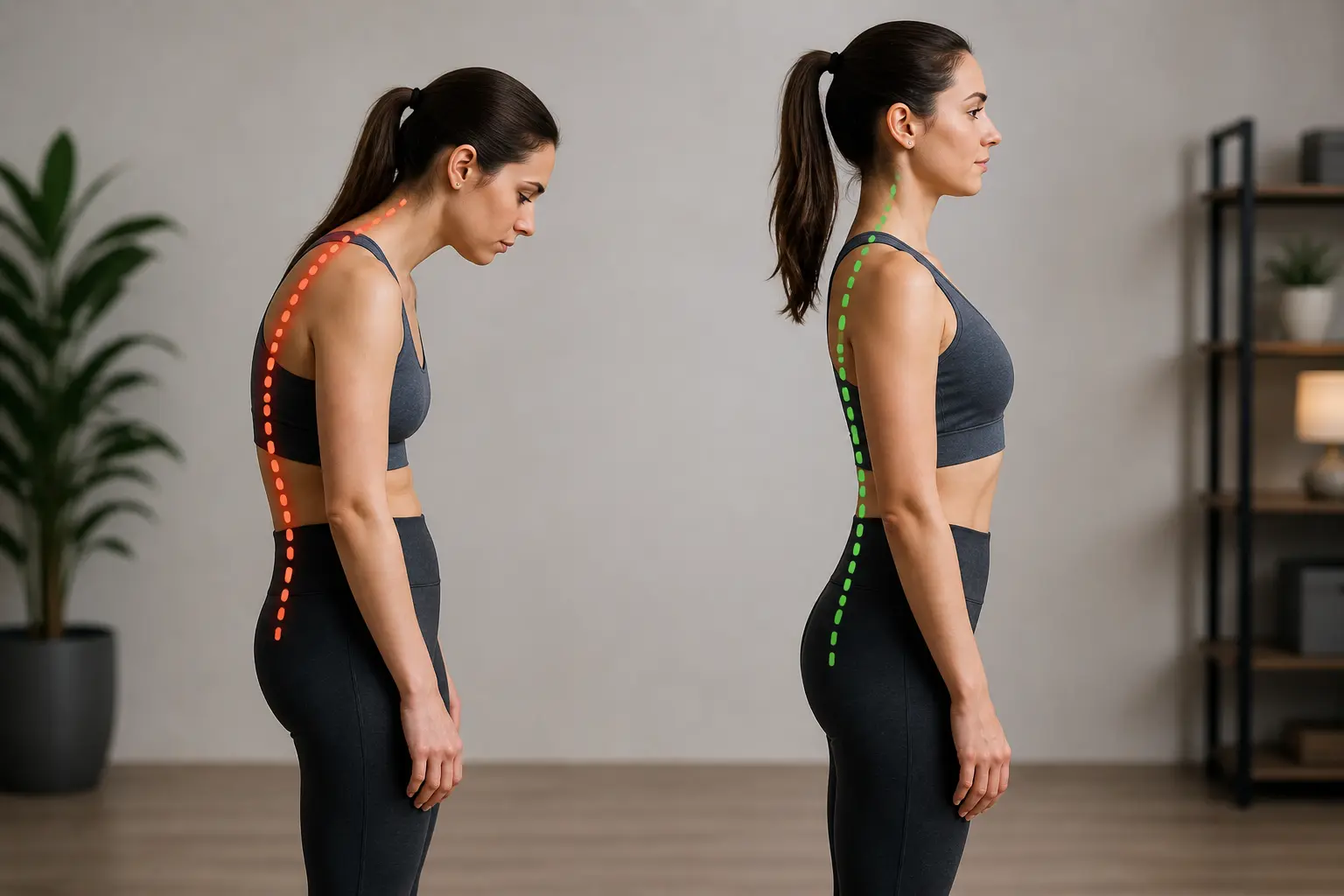
At the centre of posture is the spine.
The spine acts as the primary structure that connects and coordinates the upper and lower body. Changes in spinal alignment influence everything above and below it.
Common structural variations include:
- Kyphosis (excessive rounding of the upper back)
- Flat back (reduced natural spinal curves)
- Scoliosis (side-to-side curvature of the spine)
When these patterns are present, they alter the alignment of the head and shoulders above and the pelvis, hips, knees, and ankles below, which creates a chain reaction throughout the body.
For example, a rounded upper back may lead to forward head posture and shoulder imbalance. A change in pelvic position may affect how the hips and knees absorb load.
The spine does not work in isolation. It organises the entire system.
3. How Compensations Develop
The body is designed to adapt.
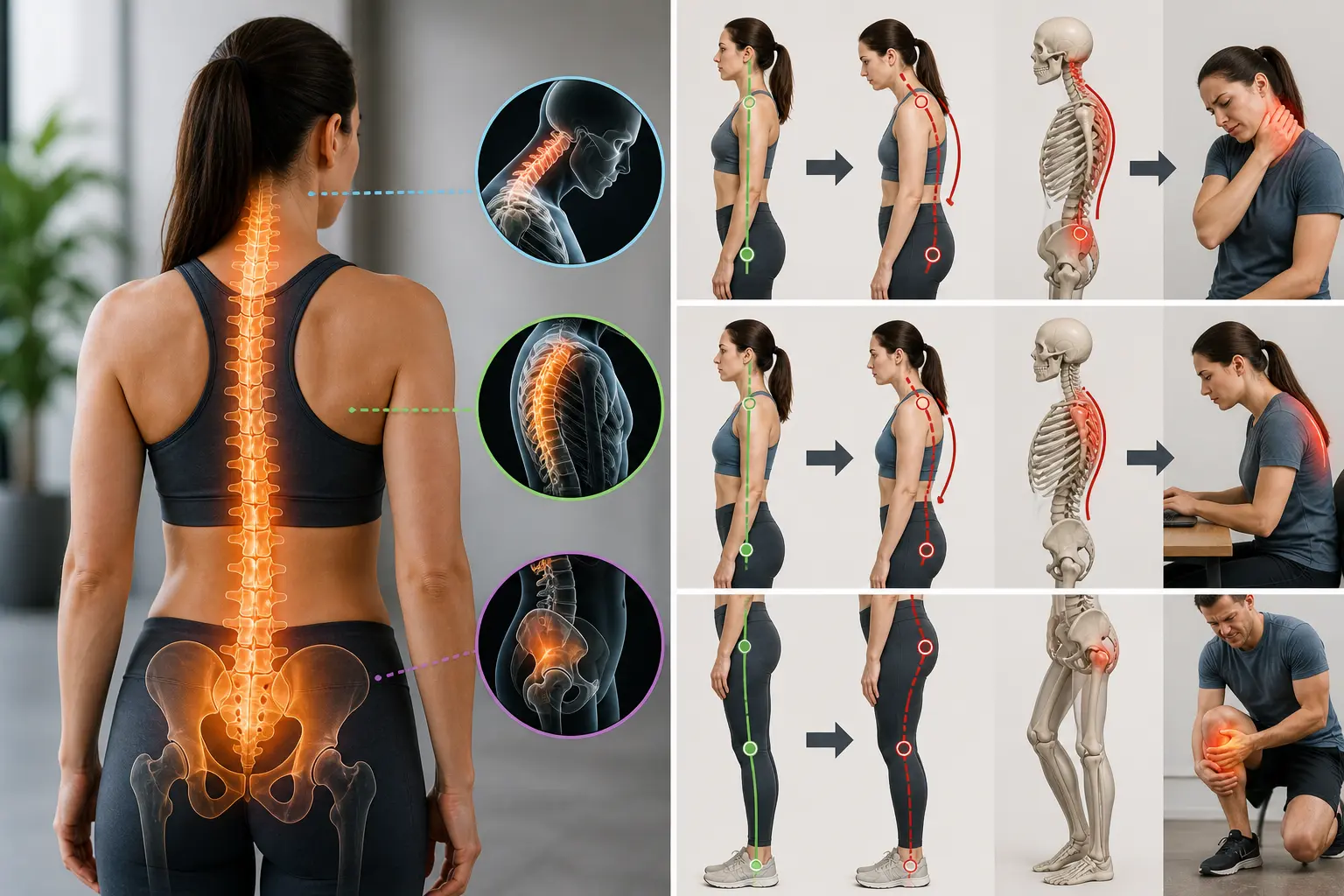
When one area is not functioning efficiently, other parts of the body compensate to keep movement possible.
For example:
- limited hip mobility may increase movement in the lower back
- weak glute muscles may shift load to the knees
- poor shoulder control may overload the neck
These compensations allow movement to continue, but they change how forces are distributed.
Over time, this leads to muscle imbalance (some muscles overactive, others weak), altered joint mechanics and increased stress on specific tissues.
As these patterns repeat, the body may adopt a protective position, reducing movement in certain areas to avoid discomfort or instability.
This protective response often feels like stiffness or tightness.
4. Why Stretching Without Assessment Fails
When stiffness appears, the natural response is to stretch.
However, if stiffness is the result of poor alignment or compensation, stretching alone does not address the root cause.
In some cases, it can make the problem worse.
For example:
- If someone has a kyphotic, rounded upper back, exercises like push-ups or swimming which are generally beneficial can reinforce that pattern if introduced without improving spinal alignment first.
- Similarly, stretching muscles that are already lengthened but weak may reduce stability further.
Without understanding posture and alignment:
- stretching may target the wrong muscles
- strengthening may reinforce faulty patterns
- exercise may increase joint stress rather than reduce it
It’s the reason why many people feel temporary relief from exercises but do not see lasting improvement.
The issue is not the exercise itself.
It is applying the right exercise to the wrong structure, which is why structured approaches like Alignment Reset Sessions are designed to address underlying posture and movement issues.
5. The Importance of Posture-Based Training
Effective training begins with understanding how the body is organised.
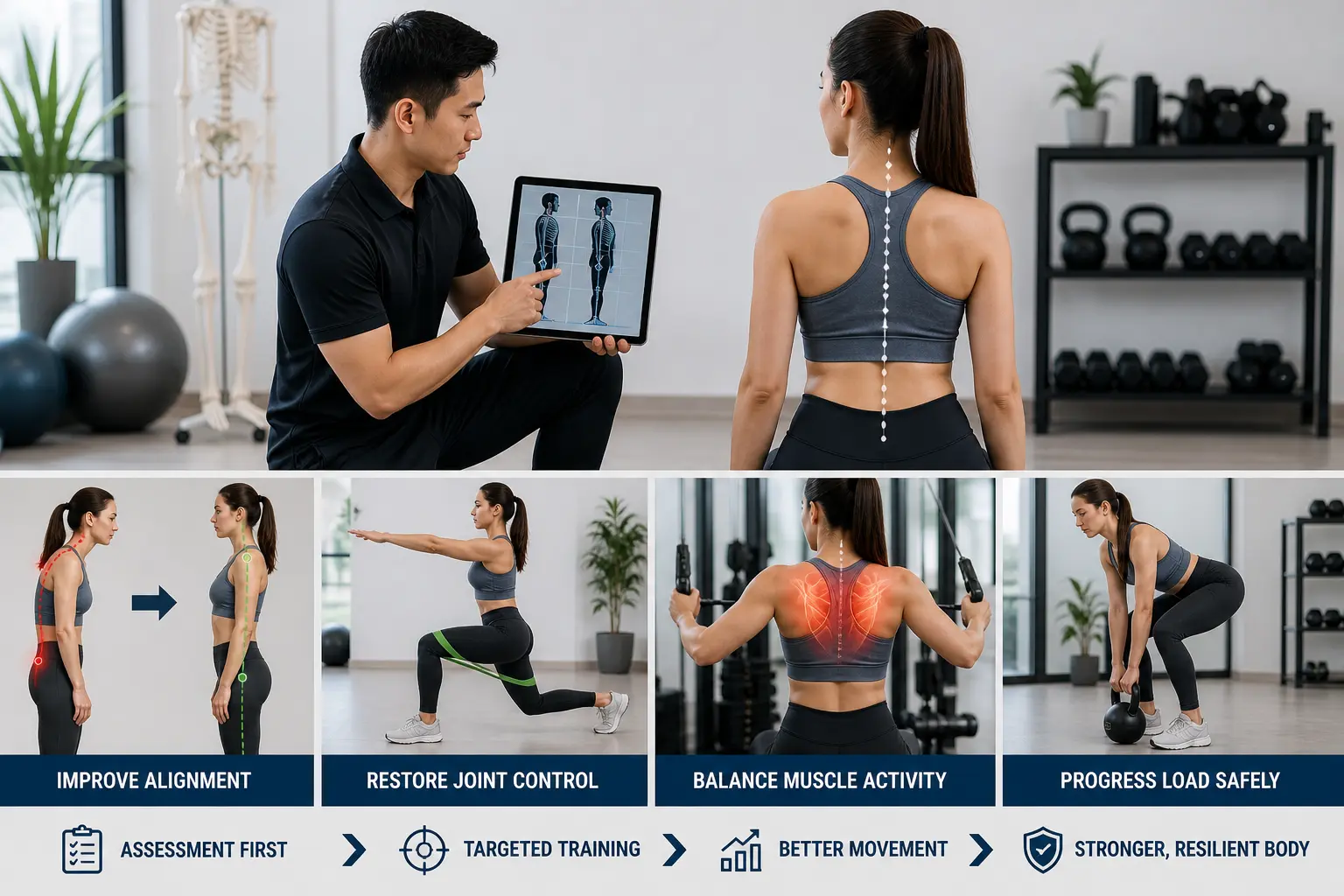
A structured posture and movement assessment helps identify alignment patterns, joint limitations, muscle imbalances and compensation strategies.
Once these are understood, exercise can be applied in a way that restores balance and improves control.
Posture-based training focuses on improving alignment, restoring joint control, balancing muscle activity and introducing load progressively.
This approach allows the body to move more efficiently, reduce unnecessary stress on joints and build strength without aggravation. Structured programs such as Foundation Sessions focus on building this base of movement and control.
At Abbysan assessment comes before exercise. The goal is not just to increase flexibility, but to build a body that can handle movement, load, and daily activity without breakdown.
You may also want to read why ageing bodies lose balance, because balance, posture, flexibility, and strength are all connected.
Final Thoughts
Stretching can be useful, but it is not the foundation of movement health.
Posture determines how the body organises movement and distributes load.
When posture is not understood, even well-intended exercise can reinforce imbalance and lead to discomfort or injury.
By focusing on alignment, joint control, and structured progression, flexibility and strength can improve together.
In many cases, the key is not doing more stretching but first ensuring the body is prepared well enough to benefit from it.
If stretching is not giving you lasting results, a one-hour Foundation Session in Phuket can assess your posture, joint control, and movement patterns before any program is prescribed.