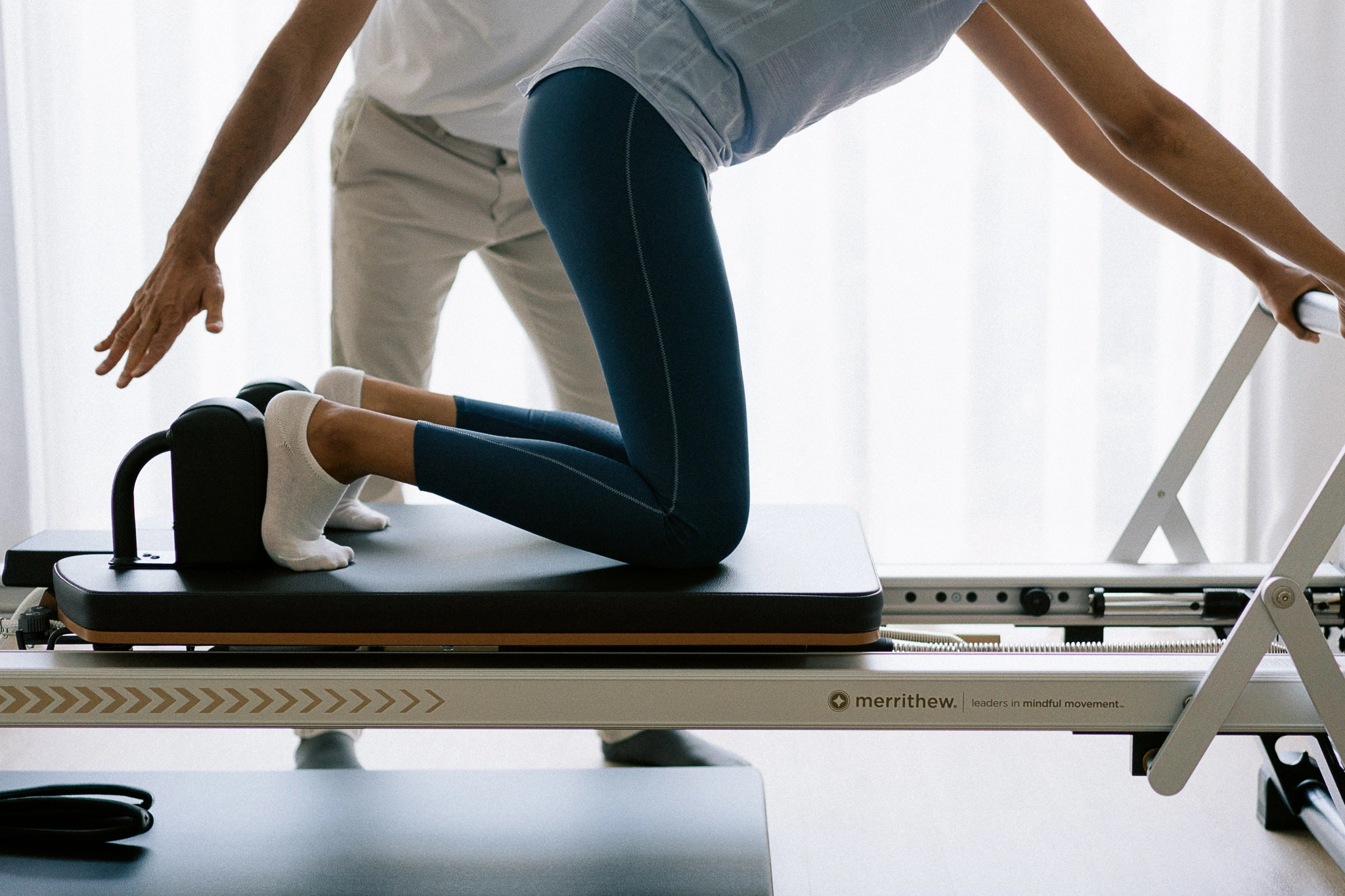
Back pain is one of the most common reasons people search for Pilates.
Pilates can be excellent for back pain, but not automatically. It depends on how, when, and why you introduce it.
So, why do people turn to Pilates for Back Pain
Pilates has a strong reputation for:
- Core strengthening
- Posture correction
- Controlled movement
- Low-impact exercise
Compared to high-intensity workouts or random gym routines, Pilates often feels safer. And in many cases, it is.
But the real reason Pilates works for back pain isn’t that it’s Pilates, but the knowledge and experience of the instructor, who also understands
- Your posture
- Your pelvic alignment
- Your rib positioning
- Your breathing mechanics
- Your current load capacity
Without that understanding, even Pilates can aggravate symptoms.
When Pilates Helps Back Pain
The lower back becomes the primary area of stress when the body is poorly organised under load.
That’s why most back pain starts after a gym session, sudden movement or activity, or after sitting for long periods.
Understanding the real causes of lower back pain is essential before starting any exercise program.
Most non-traumatic back discomfort does not begin with injury; it develops gradually due to underlying structural and movement imbalances.
Identifying the true cause of back pain allows us to correct the problem instead of temporarily masking symptoms.
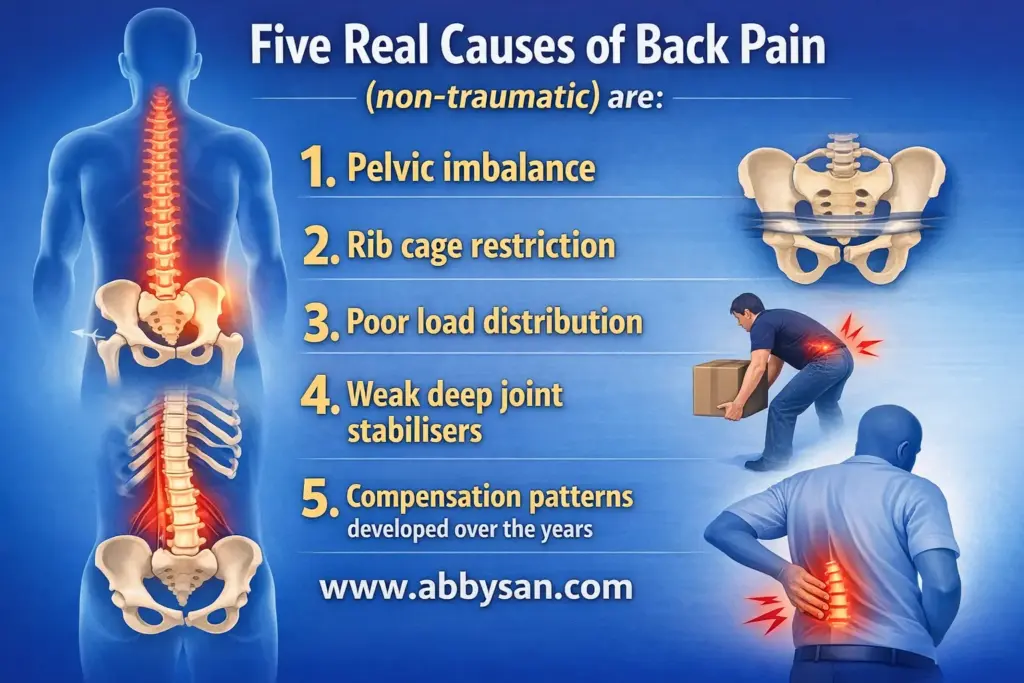
Five Real Causes of Back Pain (non-traumatic) are:
1. Pelvic imbalance
2. Rib cage restriction
3. Poor load distribution
4. Weak deep joint stabilisers
5. Compensation patterns developed over the years
Pilates exercises are introduced gradually when matched to your current capacity. This step-by-step approach helps you feel in control and reduces worry about aggravating back pain.
In this context, Pilates works on
- Improving spinal support and coordination between the ribs and the pelvis
- Building deep abdominal control
- Reducing unnecessary muscle tension
As a result, you feel the temporary relief. However, introducing exercises too early or without proper back pain assessment can lead to only temporary relief and neglect the underlying issues.
When Pilates Can Make Back Pain Worse
Pilates can aggravate back pain when it is used without context or preparation. This typically happens when:
- You are pushed into exercises too early,
- Core activation occurs without proper breathing,
- The instructor ignores asymmetry,
- You copy movements that don’t match your body structure,
- The load increased before stability was established.
In other words, the problem isn’t the exercise itself; it’s the sequence.
Even safe exercises become problematic when introduced without proper assessment.
So what should come first?
The Most Important Step Before Any Exercise
Ask yourself if your body is ready for Pilates, yoga, stretching, or strength training.
Because readiness is not about flexibility or motivation, it’s about organisation under load.
When the body is poorly organised under load, the lower back becomes the primary area of stress.
Back pain is often a sign that your system needs:
- Better organisation
- Controlled realignment
- Restored breathing mechanics
- Progressive load tolerance
So… Is Pilates Good for Back Pain?
Make sure the assessment is based on your current capacity and follows a logical progression.
If Pilates is introduced without understanding your body’s organisation, it can lead to discomfort or injury. Proper assessment builds trust and ensures safe, effective practice.
The difference is not the method; it’s the assessment.
Check these two signs on your own to guide your next step:
Question #1: Do you feel something is off about the body, like it feels twisted, uneven, or pressure on one side or more weight on one foot?
Question #2: Does your chest or rib cage move fully when you breathe?
Why a Low Back Pain Assessment Matters
A proper low back pain assessment is the first and most important step before starting any exercise or treatment plan.
Without assessing the root cause, you risk repeating the same cycle of pain.
If you’re unsure what’s causing your discomfort, start with a professional low back pain assessment to understand your movement capacity before exercising, because the real goal is to become pain-free with clarity and confidence, not just to do Pilates.
If you’re comparing options in Phuket, such as Kathu or Koh Kaew Pilates Studio, it’s important to understand whether the sessions are assessment-based and structured for back pain or for general fitness.