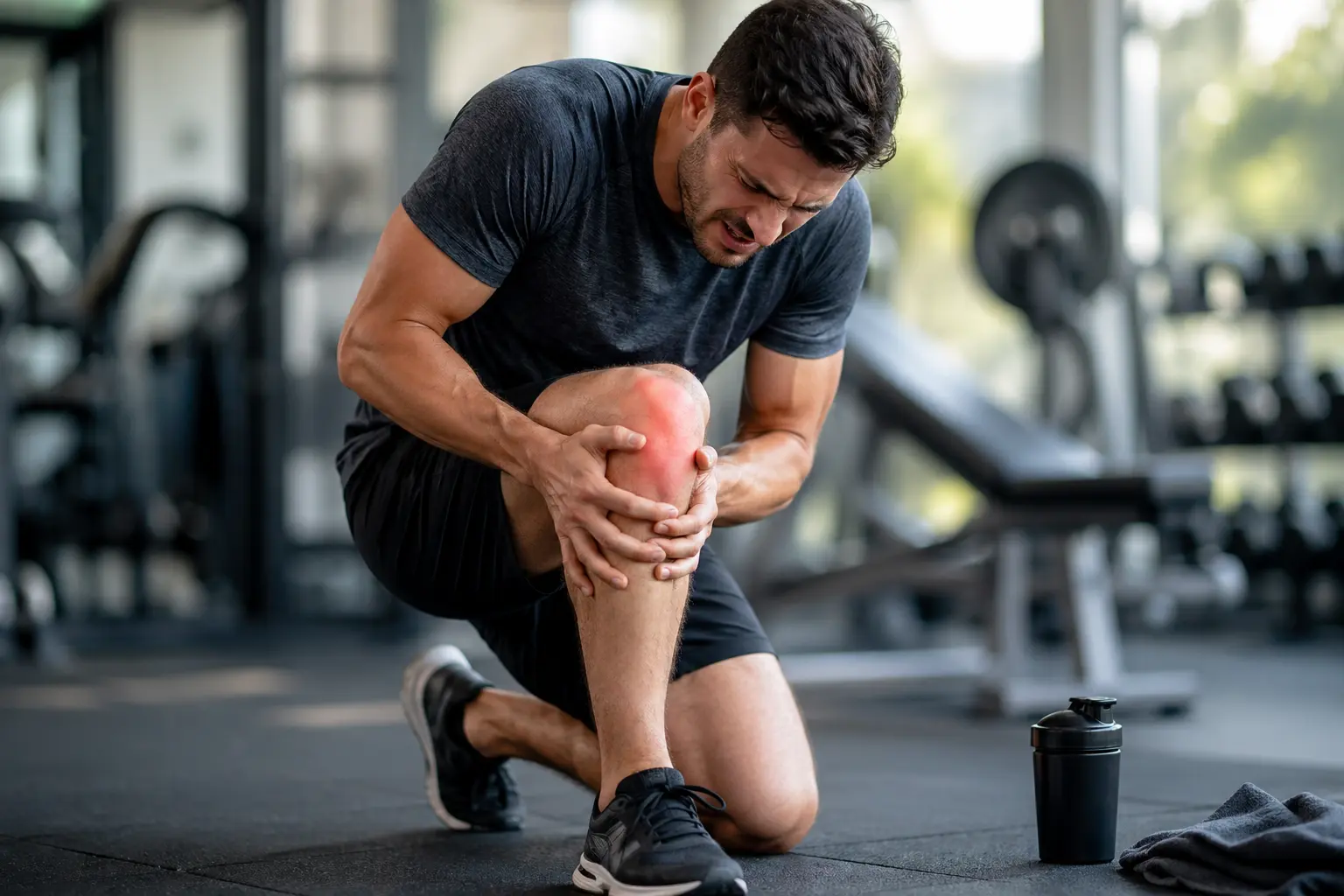
Why Exercise Can Make Joint Pain Worse (And What To Do Instead) | Phuket Guide
Many people begin exercising because they want to reduce pain, improve strength, or stay active as they age. However, many don’t realise why exercise causes joint pain in the first place.
Yet a common experience surprises many people.
They start exercising regularly, but instead of feeling better, their joints begin to feel worse.
Stiff hips after workouts, shoulder irritation after swimming, knee discomfort during training, or lower back pain after gym sessions are all common complaints.
When this happens, people often assume they need to stretch more, push harder, or simply accept it as a normal part of getting older.
In reality, the problem is rarely the exercise itself.
More often, the issue lies in how the body is organising movement and controlling the joints during that exercise.

The Common Mistake People Make
One of the biggest mistakes people make with exercise is increasing intensity without first understanding how their body moves.
When something feels tight or uncomfortable, many people respond by:
- exercising more frequently
- lifting heavier weights
- stretching aggressively
- pushing through discomfort
While these strategies may temporarily improve flexibility or strength, they do not necessarily improve movement quality.
If the body is already moving with poor alignment or inefficient muscle coordination, increasing intensity simply places more load on the same faulty pattern.
Over time, this can increase irritation in the joints and surrounding soft tissues.
Exercise should improve the body’s ability to move efficiently. But when movement patterns are disorganised, exercise can unintentionally reinforce the problem.
Why Pain Doesn’t Always Show During Exercise
Another confusing aspect of exercise-related pain is that it often does not appear during the activity itself.
Many people complete a workout feeling fine, only to experience stiffness or discomfort hours later or the following morning.
There are several reasons for this.
During exercise, the body is warm, and circulation increases significantly. Blood flow helps wash away many of the chemical signals associated with pain and inflammation.
At the same time, the body is highly adaptive. When a joint is not moving efficiently, the nervous system often allows compensations so the movement can continue.
This means other muscles or joints begin taking on extra work to complete the task.
While these compensations allow the exercise to continue, they also increase stress in areas that were not designed to handle that load repeatedly.
Once the body cools down and normal circulation returns, irritation in those tissues becomes more noticeable.
This is why many people experience pain after exercise rather than during it.

The Role of Joint Control
Healthy movement depends on the body’s ability to control the position and motion of each joint.
This control comes primarily from the coordinated work of muscles surrounding the joint.
When these muscles function properly, they stabilise the joint and guide movement smoothly through its intended range.
However, when muscles become weak, poorly coordinated, or inhibited due to posture and lifestyle habits, the joint can lose this level of control.
Instead of moving smoothly, the joint may begin to:
- shift slightly out of optimal alignment
- rely on surrounding tissues for stability
- create excessive pressure or friction inside the joint
Over time, these small inefficiencies accumulate.
The result is irritation of soft tissues such as tendons, ligaments, and joint capsules.
In simple terms, the muscles were not able to control the movement properly, and the joint experienced unnecessary stress.
How Compensation Leads to Joint Irritation
The human body is highly adaptive. When one structure cannot perform its role effectively, another area compensates to keep movement going.
While this works in the short term, it becomes problematic when repeated under load.
For example:
- A stiff hip may force the lower back to move more than it should
- Weak glute muscles may shift load toward the knees
- Poor shoulder control may overload the neck or upper back
These adjustments allow movement to continue, but they change how forces are distributed throughout the body.
Over time, this repeated stress can lead to inflammation, irritation, and persistent discomfort. Research from NIH MedlinePlus explains how ongoing inflammation can contribute to chronic pain and tissue irritation when joints and soft tissues are repeatedly overloaded.
This is why many people feel worse even though they are exercising consistently.
If you are already experiencing this pattern, it is often more effective to begin with a structured approach to reducing joint irritation before continuing regular training.
Why Assessment Matters Before Exercise
Exercise should strengthen the body, improve mobility, and increase resilience.
But for this to happen safely, you first need to understand how your body currently moves.
A structured posture and movement assessment helps identify:
- alignment issues
- joint limitations
- muscle imbalances
- inefficient movement patterns
Once these factors are understood, exercises can be selected and progressed in a way that improves control rather than reinforcing compensation.
At Abbysan, this process begins with a foundation session, where your movement, posture, and joint control are assessed before any program is recommended.
By understanding how the body organises movement, exercise can be used as a tool for long-term health rather than a source of recurring irritation.
A Common Pattern in Active Adults in Phuket
This issue is especially common among active adults in Phuket.
With activities like tennis, swimming, gym training, golf, and group fitness classes being popular, many people stay active but do not always prepare their body properly for load.
Without proper movement control and joint stability, these activities can gradually lead to:
- knee irritation
- shoulder discomfort
- lower back stiffness
- recurring tightness
This is not due to lack of effort, but often due to starting exercise without first organising how the body moves.
Final Thoughts: It’s Not About Doing More
Exercise remains one of the most powerful tools for long-term health.
But when movement patterns are not functioning well, doing more exercise is not always better.
Improving posture, restoring joint control, and addressing compensation patterns can completely change how your body responds to exercise.
Once movement becomes organised and efficient, the same exercises that once caused discomfort can become highly beneficial.
In many cases, the key is not doing more exercise but ensuring your body is prepared for it.
If you are unsure where to start, the next step is not more intensity, but clarity.
You can begin by understanding how your body moves through a proper assessment process, and then progressing safely into structured training such as guided Pilates or small group sessions.
If exercise keeps aggravating the same knee, shoulder, or back, the next step is a Foundation Session — a one-hour posture and movement assessment that identifies what’s overloading the joint before any program is prescribed.
Book a Foundation Session →