The Reconnect Method — pelvic floor therapy in Phuket.
Leaking, tightness, a sense of disconnection from your own body. These are common — but they are not normal. And they are entirely fixable.
The Reconnect Method is a clinical pelvic floor therapy developed at Abbysan and led by physiotherapist Denny Jumpaon. It treats leaking, postpartum dysfunction, core weakness, and pelvic pain through assessment-first, hands-on care. The method works by restoring the body's deep pressure system — the coordinated relationship between the diaphragm, pelvic floor, transverse abdominis, and deep spinal muscles — which governs everything from bladder control and core stability to hormonal rhythm and sleep. Unlike generic pelvic floor exercises or Kegels, every session begins with a full assessment, so treatment is specific to each person's pattern of dysfunction.
Six patterns, one root system.
Most pelvic floor problems are not simply weak muscles — they are failures of pressure and coordination. Restore the system, and the symptoms resolve.
Leaking & incontinence
Stress, urge, and mixed incontinence are pressure-management failures. When the diaphragm and pelvic floor stop coordinating, pressure spikes exceed what the floor can hold. Leaking typically resolves within a few sessions.
Postpartum & diastasis recti
Birth, vaginal or caesarean, disrupts the deep core system. We address postpartum leaking, diastasis recti, and perineal recovery — whether you are six weeks or six years postpartum.
Core weakness & disconnection
Many people train the outer core while the deep system stays switched off. Persistent lower-back pain and diastasis are often signs that the transverse abdominis and pelvic floor have disconnected.
Painful menstruation
A hypertonic pelvic floor makes the uterus contract against resistance, amplifying cramping. Releasing that tension through breath and targeted work often reduces cycle pain markedly within a few sessions.
Conceiving & pre-conception
Pelvic floor tension and dysfunctional breathing create a physiological stress state. Restoring nervous-system regulation, pelvic blood flow, and deep-core coordination prepares the body for conception.
Sleep & nervous system
Chronic pelvic floor tension holds the nervous system in low-grade stress, raising cortisol and disrupting sleep. Restoring diaphragmatic breathing supports the parasympathetic state that deep sleep requires.
Four threads, worked as one system.
Breathing retraining
Most people with pelvic floor dysfunction breathe from the chest. We restore the diaphragmatic pressure system that coordinates core, floor, and spine as one unit.
Pelvic floor activation
The floor can be weak, tight, or simply disconnected — each needs a different approach. We assess tone first, then restore correct function, rather than assuming weakness.
Core reconnection
The deep core works as a pressure canister, not isolated muscles. After pregnancy, surgery, or stress, the outer muscles compensate. We rebuild it from the inside out.
Hands-on care
Precise, evidence-based manual techniques target the root cause of each presentation — not the symptom — for both women and men.
Your body is not broken. It is simply waiting to reconnect.
Assessment first. Always.
There is no generic starting point. What we find in the first observation determines everything that follows.
Pelvic floor & breathing assessment
Denny reads posture, rib position, breathing pattern, and movement quality to identify whether the pelvic floor is too tight, too loose, or simply uncoordinated. This sets the direction for everything else.
Breath & pressure retraining
You learn to use the diaphragm correctly — expanding the ribcage three-dimensionally — and to coordinate the exhale with pelvic floor engagement, restoring the pressure system that underpins all movement.
Manual techniques & targeted activation
Hands-on work releases tight tissue and helps the nervous system relearn correct firing patterns. This is not massage — it is precise clinical input, integrated progressively.
Home programme
Each session ends with two or three targeted movements or breathing exercises. Most clients notice meaningful change within three to five sessions — the home practice is what makes it stick.
Assessment-first, and entirely private.
For anyone with pelvic floor dysfunction, breathing disconnection, or core weakness — regardless of age or gender. No drop-ins, no group settings, no generic programmes.
The difference is felt, not described.
"After two pregnancies I had completely lost connection with my core and was leaking every time I exercised. After four sessions I understood why — and the leaking stopped. I wish I had done this years ago."
"I am 16 and had painful periods for as long as I can remember. In the first session Denny identified chronic pelvic floor tension I did not even know I had. Within a few sessions my cycle pain reduced significantly. I did not know these things were connected."
"I came in with severe nerve compression in my neck and surgeons telling me I had no other option. The team worked on my posture for months — but the final piece was the breathing and pelvic floor work. Once my breathing changed, my sleep improved, the nerve pain reduced, and I have not needed surgery."
Names used with permission. Results vary by individual.

Denny Jumpaon, BPT
Breath · Core · Pelvic Floor- Bachelor of Physiotherapy (BPT)
- Certified Yoga & Pilates Instructor
- Pelvic floor rehabilitation — specialist clinical training
- Breathing retraining & intra-abdominal pressure therapy
- Fifteen years of clinical experience in Phuket, Thailand
- Available at Boat Lagoon, Ko Kaeo and Choeng Thale
Two private studios in Phuket.
By appointment only — no drop-ins.
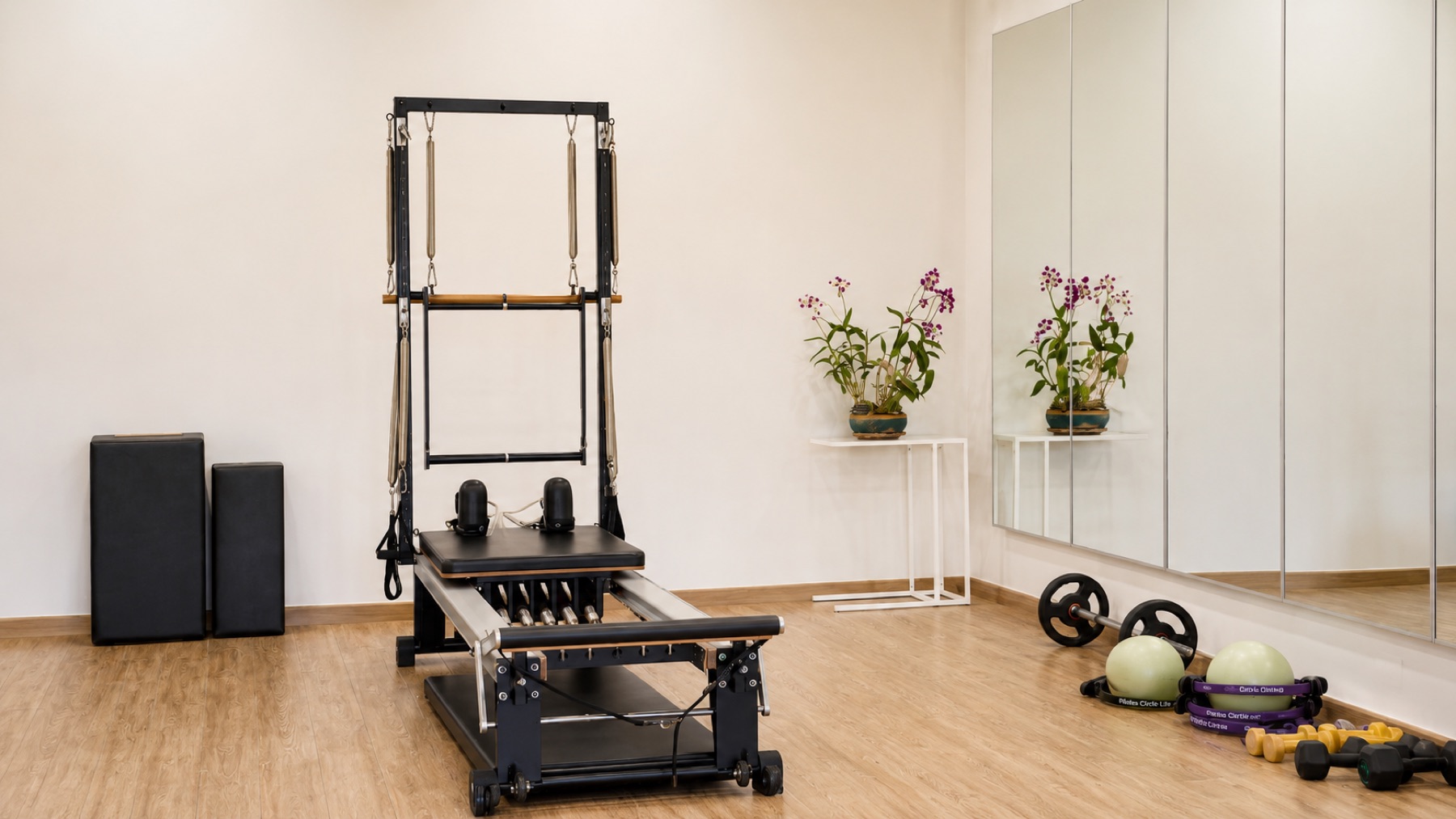
Boat Lagoon, Ko Kaeo
9/1 Pulse Building, 3F, Thepkrasattri Rd
Ko Kaeo, Mueang
Phuket 83000
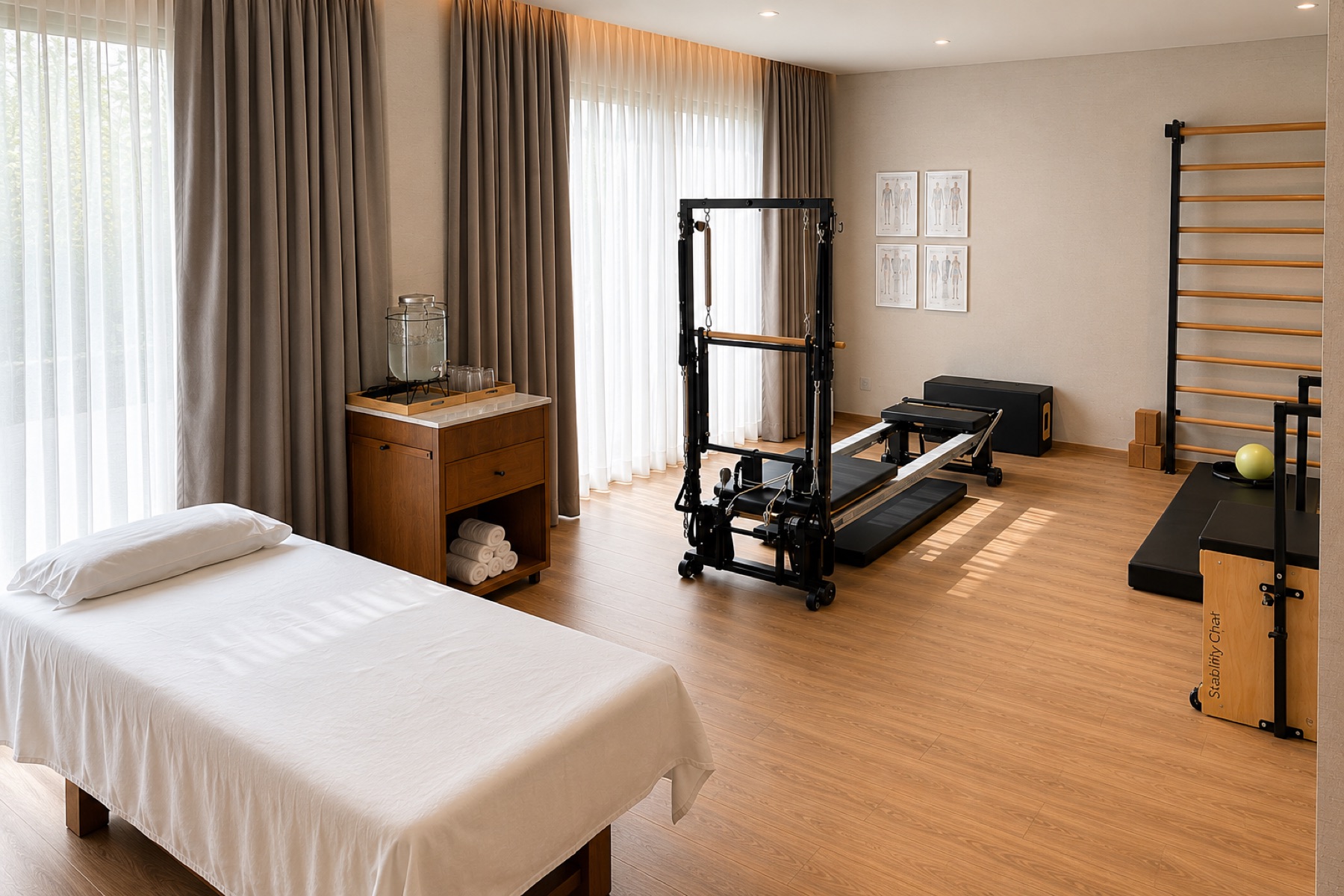
Before you begin.
Do I need a referral?
No referral is needed. If you have a recent diagnosis, a post-surgical history, or are currently under medical care, mention it when you enquire so Denny can prepare appropriately and coordinate with your doctor if needed.
How many sessions will I need?
Most clients notice a clear difference within three to five sessions. The total depends on how complex and long-standing the pattern is. Denny will give you a realistic estimate after the first assessment.
Is the Reconnect Method covered by insurance?
Sessions are private pay. We can provide a receipt and session summary that you may submit to your insurer for reimbursement under physiotherapy or clinical wellness benefits. Contact your provider before booking if this matters to you.
Can men do the Reconnect Method?
Yes. Men have a pelvic floor too, and it is equally susceptible to dysfunction — commonly incontinence after prostate surgery, chronic lower-back pain, or breathing dysfunction affecting performance. The process is the same; the anatomy differs, and Denny is trained to work with both.
How is this different from regular Pilates or yoga?
Pilates and yoga are movement practices. The Reconnect Method is a clinical intervention rooted in physiotherapy. Standard pelvic floor exercises address one isolated muscle and assume weakness, when many people are actually too tight. The method assesses pelvic floor state first, works the full pressure system, and applies manual techniques no mat class can replicate.
How do I begin?
Every client starts with a Foundation Assessment — the reading that determines the right plan for your body. Book the assessment and we will take it from there. Sessions are held at Boat Lagoon, Ko Kaeo, with private sessions also available at Choeng Thale, by appointment only.
Begin with an assessment.
The Reconnect Method starts where all good care does — by reading your body before anything is prescribed. Book a Foundation Assessment to begin.
