Breath & Core: The Missing Link in Teacher Training Programs

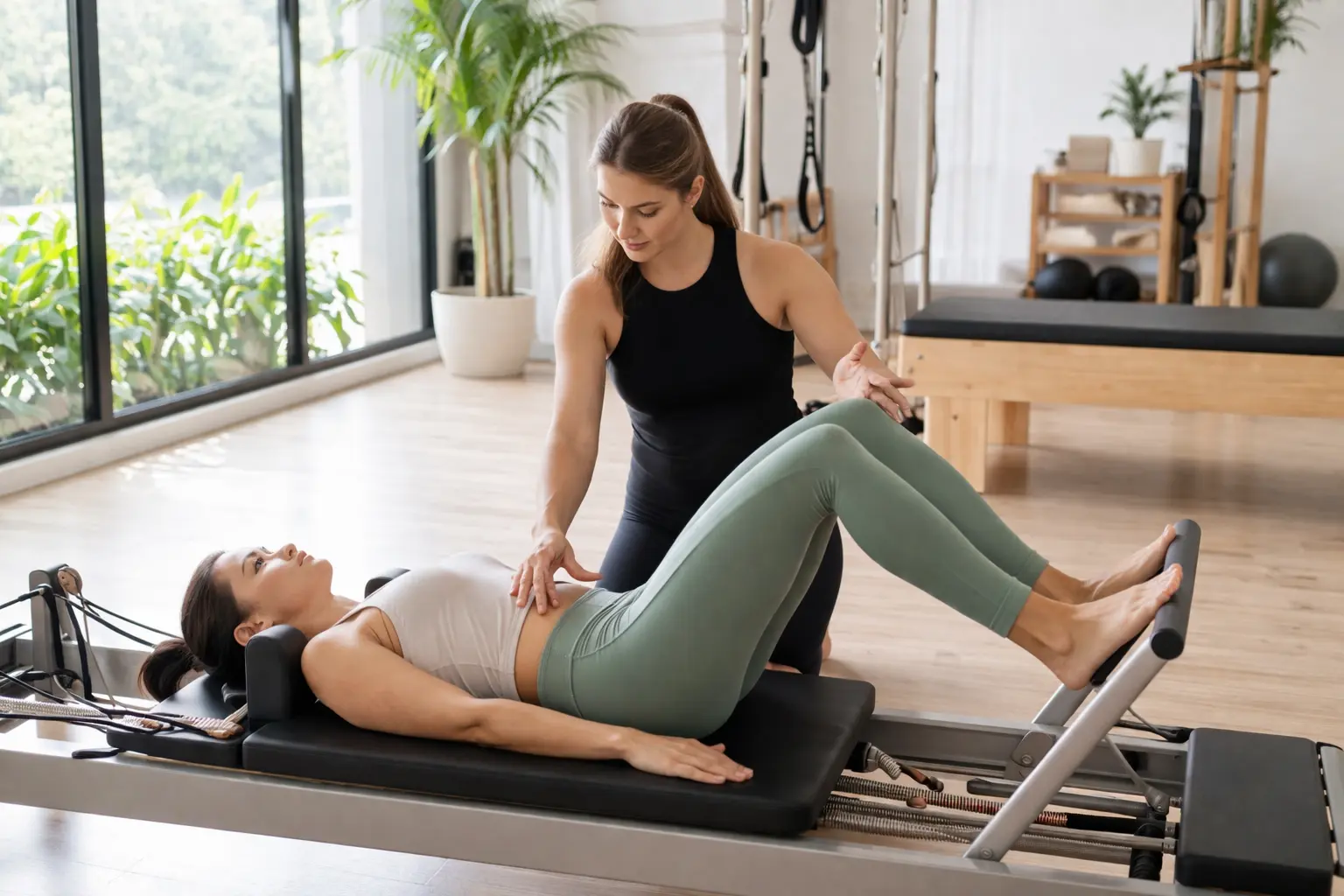
Breath and Core Integration Pilates Training Session

Breath & Core: The Missing Link in Teacher Training Programs And Why More Cues Don’t Fix It

Breath and core integration in Pilates is one of the most overlooked elements in teacher training breath and core education.

Most teachers are taught to train the core.

Most teachers are taught to cue the breath.

But very few are taught how the two actually work together.

Many breath–core issues begin with posture habits that teachers often overlook.

As a result, students often look engaged, stable, and strong yet still experience pain, restriction, or fatigue.

Not because they aren’t trying, but because the relationship between breath and core was never properly established.

The Core Is Not Just the Abs

One of the most common misunderstandings in movement training is this:

Core = abdominal muscles.

In reality, the core is not a single muscle or one action.

It is a coordinated system of approximately 29 muscles, including:

  • Pelvic floor
  • Transverse abdominis
  • Diaphragm
  • Deep spinal stabilisers

When this system works together, movement feels supported and efficient.

When it doesn’t, the body compensates, usually by gripping, bracing, or holding the breath.

How Breath Is Commonly Taught and Why It Falls Short

In many teacher training programs, breath is taught:

  • Philosophically
  • As a relaxation tool
  • As belly breathing or lateral rib breathing

What’s missing is mechanical understanding.

Breath is three-dimensional.

It must interact with the rib cage, diaphragm, pelvis, and spine — not exist as a separate practice.

When breath is taught in isolation, it rarely transfers into movement.

Observing posture and breathing at rest often reveals where to start.

What Actually Happens When Core and Breath Are Disconnected

A weak or poorly organised core restricts breathing.

Restricted breathing, in turn, makes the core brace more difficult to use.

This creates a familiar pattern:

  • Movement feels difficult
  • Breathing becomes shallow
  • The body grips to feel safe
  • Painful segments stop moving

A common example is pain.

When people experience pain, they instinctively:

  • Hold their breath
  • Grip their core
  • Reduce movement at the affected segment

This is protective — but not healing.
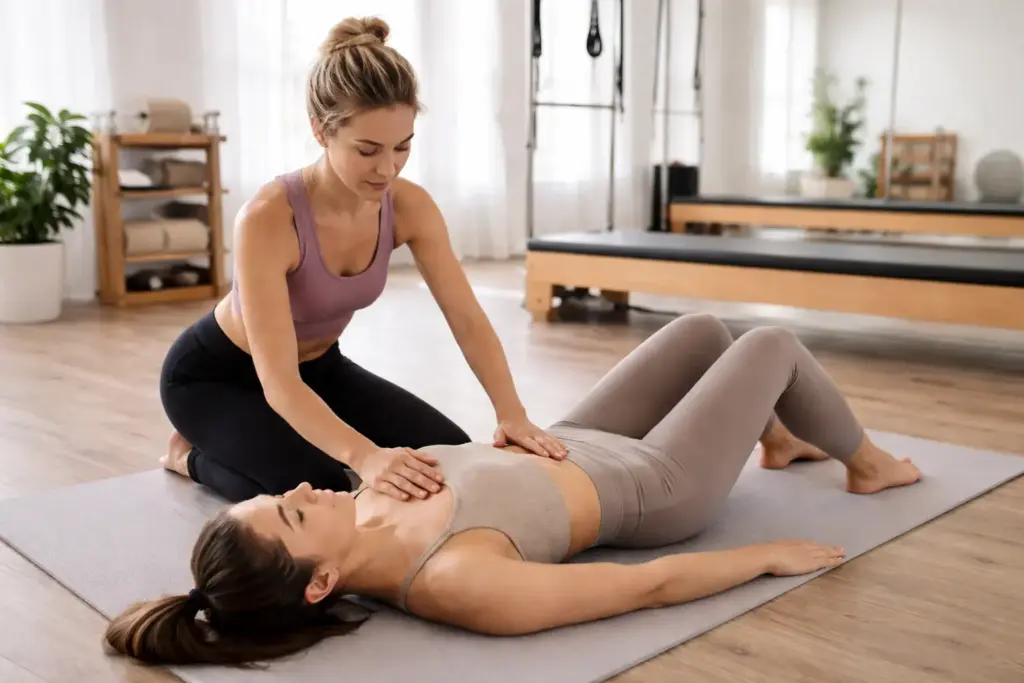
Clinical Pilates Core Stability and Breathing Technique

Why Integrating Breath Into Movement Works Faster

Breathing alone does not restore function.

Core activation alone does not restore movement.

Different movement disciplines work with breath and core in different ways, depending on their therapeutic intention.

But breath integrated into supported movement often improves both faster than either approach on its own.

When posture provides support, and breath is introduced before load:

  • The nervous system calms
  • Movement becomes safer
  • The core organises naturally

This is why introducing breath after stability and before load is so effective.

The Principle That Fixes Most Breath–Core Issues

Before teaching breath patterns or exercises, teachers must first:

  • Identify the core (pelvic floor and transverse abdominis)
  • Learn to activate it gently without gripping or bracing
  • Integrate breathing into movement, rather than practicing breath in isolation

Only then does breath support movement instead of competing with it.

What Teachers Should Do Instead

Instead of adding more cues or drills:

  • Stop forcing engagement
  • Help students find the core first
  • Allow activation to be subtle
  • Integrate breath slowly into Pilates or movement exercises

When students feel supported, breathing returns naturally.

When breathing returns, movement becomes easier, not harder.

A Common Real-World Example

Some clients feel Pilates or yoga exercises are “too easy.”

Yet they fatigue quickly or feel pressure in the spine and thighs.

What’s actually happening is this:

  • They can’t connect breath and core
  • Load bypasses support
  • Effort shifts into the spine and legs

Once this relationship is corrected, everything changes.

Exercises feel purposeful.

Effort feels distributed.

And movement suddenly makes sense.

Why Sequencing Matters More Than Force

Breath doesn’t strengthen the core by itself, and core engagement doesn’t improve breathing by force.

Sequencing is what matters.

When teachers understand when to introduce breath, how to support the core, and why load must wait, students stop compensating and start moving with confidence.

This article is part of an ongoing series on posture, assessment, and intelligent movement sequencing for teachers. Explore more at Classical Methods.
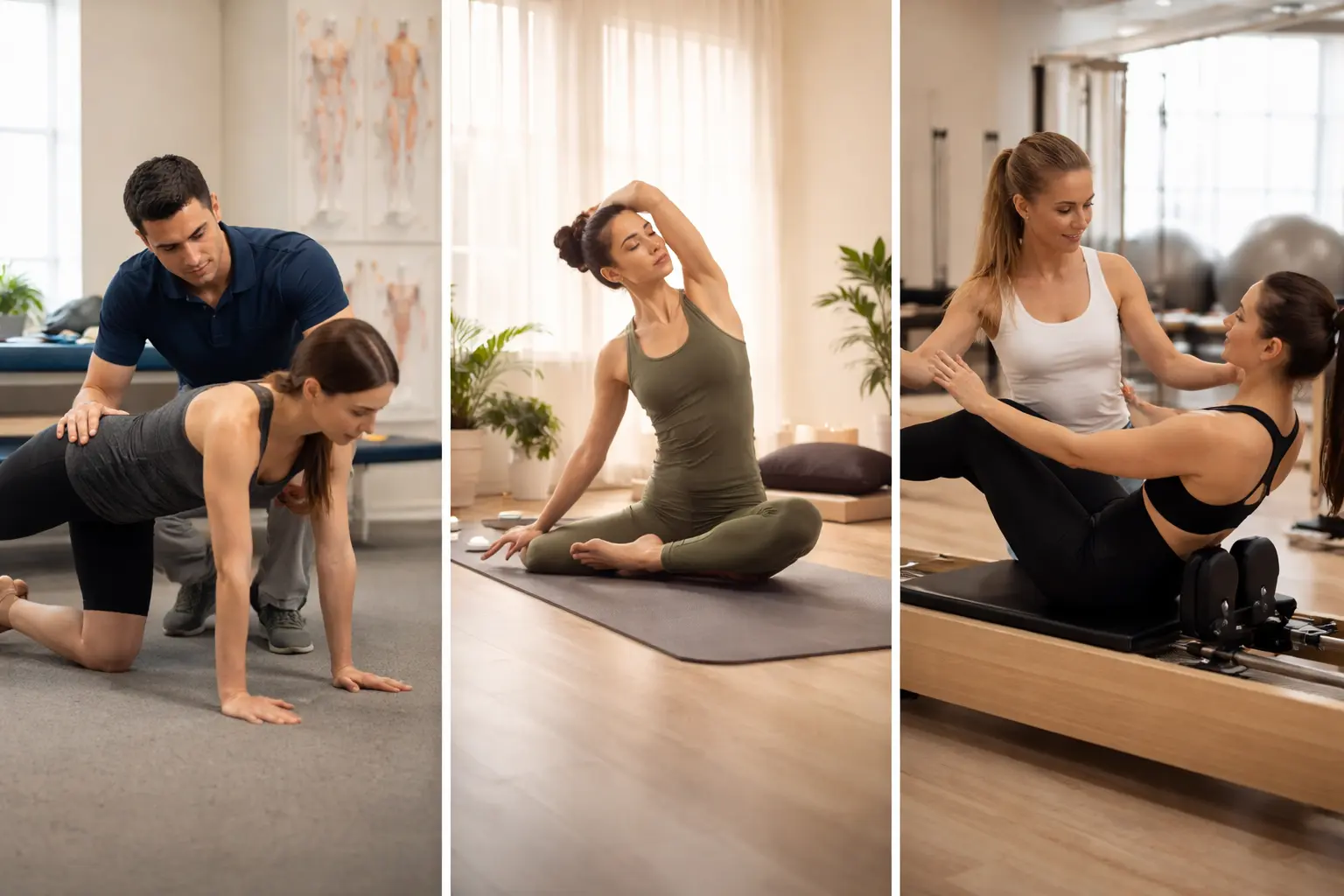
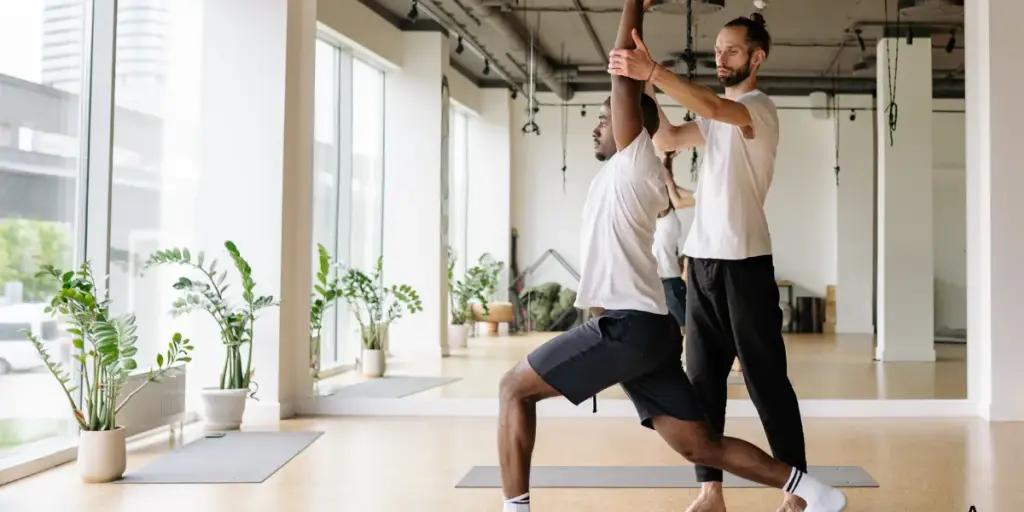
Movement Therapy vs Yoga Therapy vs Clinical Pilates

Movement Therapy vs Yoga Therapy vs Clinical Pilates

Movement Therapy vs Yoga Therapy vs Clinical Pilates: What’s the Difference? And Why the Difference Actually Matters?

Movement Therapy vs Yoga Therapy is often misunderstood, especially when compared with approaches like Clinical Pilates vs Yoga Therapy and Movement Therapy vs Pilates. While these methods may look similar, they differ significantly in assessment, intention, and application.

Yoga Therapy, Clinical Pilates, and Movement Therapy are often spoken about as if they are interchangeable.

They’re not.

They may use similar movements.

They may look similar from the outside.

But similar movement does not automatically make something therapeutic.

The difference lies not in the exercises but in intention, assessment, and sequencing.

Why This Confusion Exists

Yoga and Pilates are movement-based disciplines.

Over time, many instructors begin to see them as collections of exercises, sometimes isolated, sometimes complex.

But complexity alone does not make movement therapeutic.

Without understanding:

  • muscle actions
  • planes of motion
  • joint ranges
  • how different bodies organise movement

The same exercise ends up being copied across all individuals.

At that point, it becomes guesswork rather than therapy.

Movement Therapy, on the other hand, is defined by how and why movement is applied, not by the movement itself.

Clear Working Definitions

Movement Therapy

Movement Therapy is the assessment-driven application of movement with a specific therapeutic intention.

It requires:

  • understanding symptoms
  • segment-based assessment
  • movement assessment
  • knowledge of muscle function and joint mechanics

Its purpose is not exercise delivery but restoring function, reducing pain, and reorganising movement.

In short: Restore function · Reduce pain · Improve movement organisation · Support rehabilitation.

Movement Therapy vs Yoga Therapy vs Clinical Pilates comparison

Yoga Therapy

Yoga Therapy works on systemic health.

It focuses on:

  • posture
  • breathing
  • myofascial slings
  • kinetic chain relationships

Its goal is to build resilience, improve internal organisation, and support long-term well-being, especially in people with stiffness, stress, and breath-related limitations.

In Short: Systemic health · Myofascial and kinetic chain balance · Breathing efficiency · Resilience

Clinical Pilates vs Yoga Therapy

Clinical Pilates

Clinical Pilates sits at the intersection of therapy and conditioning.

It emphasises:

  • posture assessment
  • movement assessment
  • breathing
  • structured, efficient exercise programming

Its purpose is to support rehabilitation, prehabilitation, and post-surgery recovery, improve movement organisation, and provide long-term maintenance after therapeutic intervention.

In Short: Rehabilitation support · Efficient movement training · Long-term maintenance · Resilience

Movement Therapy vs Pilates

Understanding where each method begins truly makes a big difference.

  • Movement Therapy starts with symptoms, followed by segment-based and movement assessment.
  • Yoga Therapy starts with posture and breathing.
  • Clinical Pilates starts with posture analysis, movement assessment, and breathing.

Same tools.

Different entry points.

Different intentions.

A short static posture observation is often enough to decide where to begin.

Where Instructors Often Go Wrong

Across all three disciplines, the most common mistake is the same:

Skipping assessment and over-prescribing techniques or exercises.

Most breakdowns begin with posture habits that are rarely addressed early.

When exercises are layered without clarity:

  • pain persists
  • compensation increases
  • progress slows

The problem isn’t the method, it’s the sequence.

Breath and core organisation often determine whether the load supports or overwhelms the body.

When Each Approach Is Appropriate

  • Use Yoga Therapy when a client presents with stiffness, stress, restricted breathing, or needs systemic regulation.
  • Use Movement Therapy when a client is restricted primarily due to pain and loss of function.
  • Use Clinical Pilates for rehabilitation, prehab, pre- or post-surgery work, and as a maintenance program after movement therapy.

Each has its place — when applied at the right time.

The Unifying Principle

All three approaches fail when posture, priority, assessment, and load are ignored.

Without these:

  • Movement becomes random.
  • The load arrives too early.
  • Exercises stop teaching and start testing.

Different systems collapse for the same reason.

What Teachers Should Understand

The solution is not more exercises.

And it’s not another method.

Proper sequencing is the solution.

When sequencing is correct:

  • Yoga Therapy becomes more effective
  • Clinical Pilates becomes safer
  • Movement Therapy becomes clearer

The body doesn’t need variety; it needs intelligent progression.

Exercises don’t make movement therapeutic. Decisions do.

When teachers understand why they’re using a system and when to apply it, confusion disappears, and results improve naturally.

Next, if you want to develop clearer decision-making across movement therapy, yoga therapy, and clinical Pilates, explore our educational pathways at Classical Methods.