You started with crunches or a plank because that is what core strength has always meant. Weeks later, your midsection looks the same, sometimes it even bulges more when you try, and nothing about your trunk feels more stable than before you started.
Pregnancy does not simply weaken the core. It changes how the abdominal wall, deep core, pelvic floor and breath work together. Returning immediately to standard ab exercises can load the muscles that are already compensating while the deeper support system still struggles to coordinate.
Think of your core like a tent held up by several ropes. Pregnancy does not loosen those ropes evenly. Some stretch far more than others as the belly grows. A crunch repeatedly tightens the front rope, but it does not necessarily restore the deeper layers that help stabilise the trunk from within.
Why Crunches After Pregnancy Do Not Rebuild Everything
The front abdominal muscles often continue working hard after pregnancy, especially when deeper support has not fully returned.
That can make the midsection bulge or feel unstable during effort, even when someone is doing regular core exercises.
The deeper muscles around the trunk work together with the pelvic floor and breathing system to support pressure control and trunk stability. This is why postnatal recovery usually needs more than repeated crunches or planks.
The Pregnancy, Birth and Baby guidance on abdominal separation explains how pregnancy can affect the abdominal wall and why gradual recovery matters after birth.
What Real Postnatal Restoration Rebuilds First
Postnatal restoration begins with the deeper support system rather than the outer muscles alone.
The first step is learning to coordinate the deep trunk muscles with breathing and pelvic floor activity before adding heavier loads.
From there, resistance can increase gradually so the deeper layers contribute before the larger outer muscles take over.
This approach supports more balanced pressure management and gives the trunk a stronger foundation for lifting, carrying, walking, exercising and everyday movement.
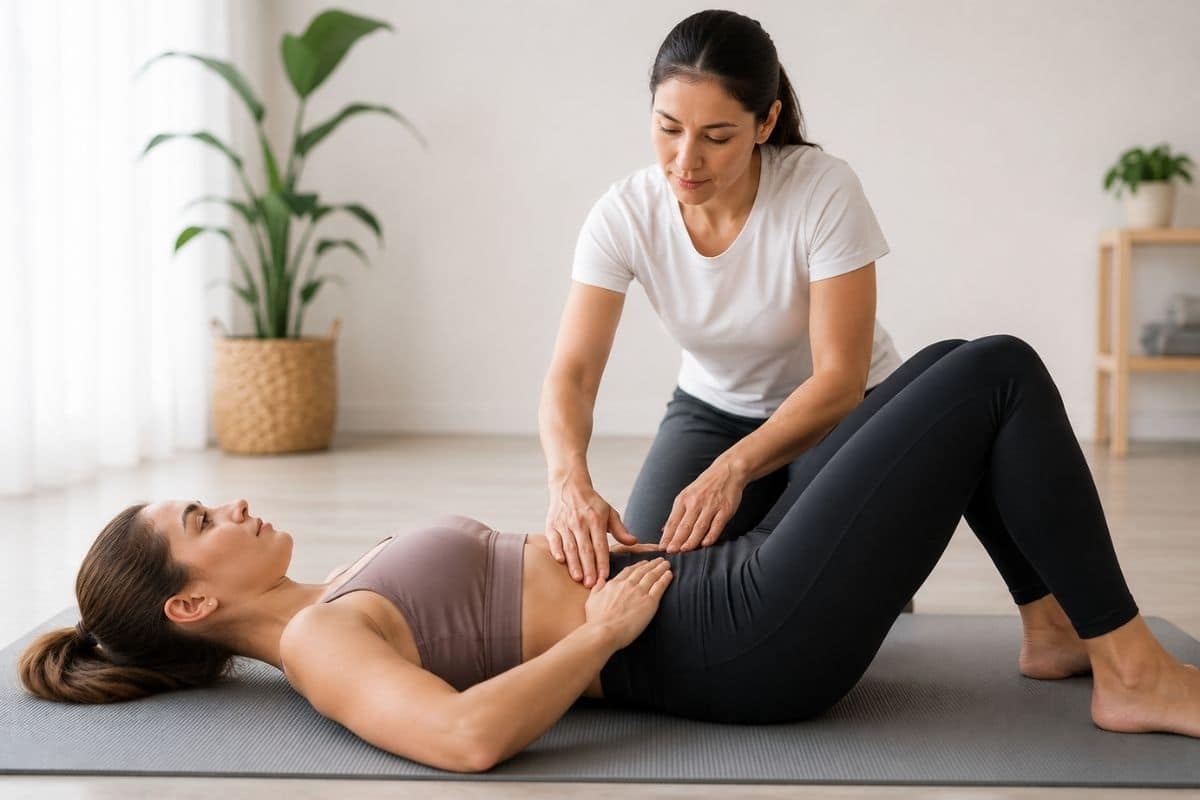
At Abbysan, the Reconnect Method for pelvic floor and core recovery in Phuket focuses on rebuilding this coordination in the right sequence rather than simply adding more abdominal exercises.
Why This Takes Longer Than a Six-Week Plan
Several parts of the core adapt during pregnancy, and they do not always recover at the same pace.
Restoring coordination takes repetition, awareness and gradual progression. The deeper muscles need time to respond consistently before the body can handle more demanding core work efficiently.
That timeline is not a sign that you are doing something wrong. It reflects the fact that the body adapted over many months and often needs a structured progression to rebuild support.
For some people, recovery may take a few months rather than a few weeks, especially when abdominal separation, pelvic floor symptoms or ongoing instability are present.
Rebuilding Core Strength in the Right Order
If your midsection still does not feel stable after weeks of standard core work, adding more repetitions may not be the answer.
The missing step may be restoring the connection between the deep core, pelvic floor and breath before asking the outer abdominal muscles to work harder.
Once that foundation improves, stronger exercises can become more effective because the whole system shares the load instead of relying on one overworked area.
Rebuild Your Core in the Right Order
Book a Reconnect Method session with Denny Jumpaon to restore coordination between your deep core, pelvic floor and breath before progressing to stronger postnatal exercise.