Lying on a mat, calm and focused, you can hold a pelvic floor contraction just fine. The physiotherapist confirms it. You leave feeling like the muscle works.
Then you pick up your toddler, run for the bus, or push through a hard set at the gym, and the same muscle that tested strong on the mat does not seem to support you in the same way.
That is because the test and the moment that actually matters rarely happen in the same position or under the same load.
Muscles rarely work alone. They function as part of a wider system, sharing tension with the deep core, glutes, diaphragm and surrounding tissues.
Why Lying-Down Strength Does Not Always Show Up Standing Up
A pelvic floor contraction tested while lying down happens with very little competing demand. Gravity is reduced, breathing is calmer, and the surrounding muscles do not need to contribute as much.
Standing changes the situation immediately. Gravity increases the load, breathing changes, and the glutes and deep core either join the task or fail to contribute effectively.
A muscle that only practises under calm conditions may not automatically coordinate well under movement, effort or fatigue.
The Pelvic Floor First programme explains that pelvic floor muscles work together with the abdominal and back muscles to support the spine, bladder and bowel during everyday activity.
What Functional Pelvic Floor Training Actually Looks Like
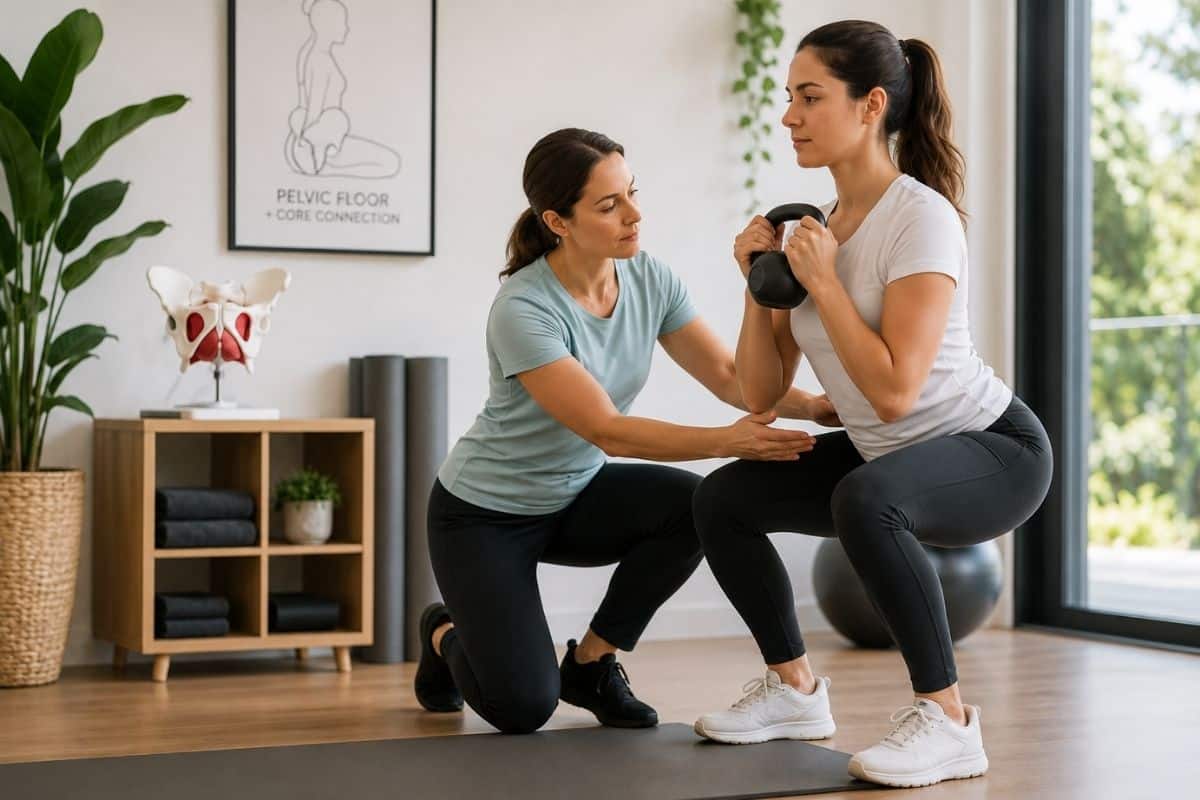
Functional training means preparing the pelvic floor for the positions and demands where it actually needs to work.
That can include standing, squatting, lifting, walking, running and breathing under effort rather than practising only while lying still.
It also means training the pelvic floor alongside the deep core, glutes and breath so the body can distribute load more efficiently instead of relying on one muscle to manage everything alone.
At Abbysan, pelvic floor therapy in Phuket focuses on restoring this coordination through The Reconnect Method rather than treating pelvic floor strength as an isolated exercise.
Why This Matters Beyond a Single Symptom
Real pelvic floor function is not only about producing a strong contraction during an assessment.
The more useful question is whether that strength remains available when you lift something, move quickly, carry a child, exercise or deal with a sudden increase in pressure.
Functional pelvic floor health means the muscle can respond as part of the wider system wherever daily life places demand on it.
If your pelvic floor tests strong but real life still feels unsupported, the missing piece may be coordination rather than more isolated repetitions.
Train Your Pelvic Floor for Real Life
Book a Reconnect Method session with Denny Jumpaon and learn how to coordinate your pelvic floor, deep core, glutes and breath during the movements that matter most.
