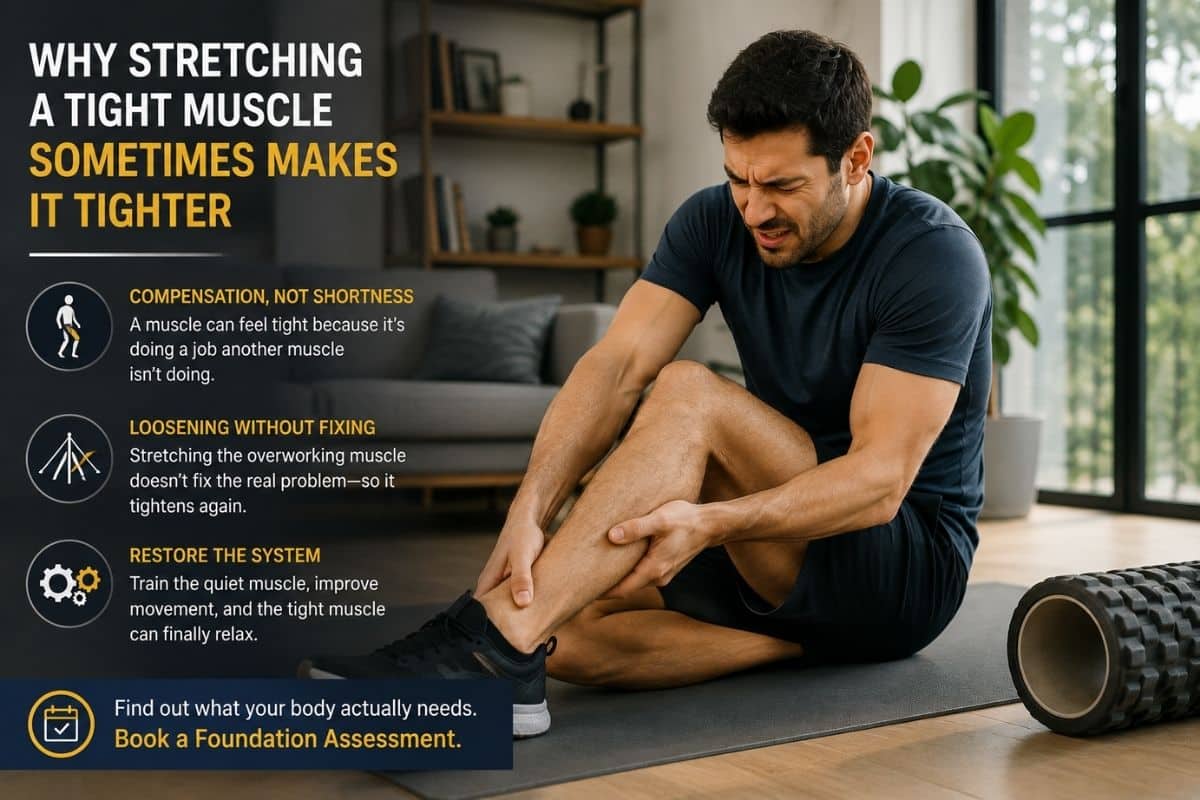
You stretch the same tight muscle every day—calves, hip flexors, the side of your neck, whichever one has claimed the title for you. It feels looser for an hour. By evening, it is back, sometimes tighter than before you stretched it and occasionally sore in a way it was not that morning.
You have been told tight muscles need stretching. This particular muscle keeps disagreeing.
Think of the body like a tent held upright by several guy-lines. If one line has been working harder than the others to keep the pole from leaning, that line may feel tight because it is carrying extra load.
Loosen that line without changing what the rest of the system is doing, and the body may simply tighten it again to restore stability.
Why the Tightness Can Come Back
Some muscles are genuinely shortened and may benefit from mobility work. Others feel tight because they are working harder to stabilise a joint or compensate for reduced contribution elsewhere.
In that second situation, stretching can create temporary relief without changing the reason the muscle became overactive in the first place.
That is why the same area can feel looser for a short time and then tighten again once you return to walking, sitting, lifting or training.
The Cleveland Clinic notes that muscle tightness and spasms can have several causes, including overuse, fatigue and changes in how muscles are being loaded.
How to Tell Whether Stretching Is Actually Helping
A useful clue is what happens after the stretch, not just during it.
If a muscle stays more comfortable and your movement improves afterward, the extra length may have been useful.
If the tightness returns within hours, especially when the same activity brings it straight back, the problem may involve how load is being shared rather than simple lack of flexibility.
The pattern matters. Does the muscle tighten only after standing? Does it return during running? Does another area of the body feel weak, unstable or slow to contribute at the same time?
What the Muscle May Need Instead
A repeatedly overworking muscle may need better support from the rest of the movement system rather than more stretching.
That can mean improving strength, timing, control or mobility in a neighbouring area so the tight muscle no longer has to do all the work by itself.
Once the load becomes better distributed, the overworked area may begin to relax without needing constant stretching.
At Abbysan, a Foundation Assessment can help identify which areas are overworking, which are contributing less, and how those patterns affect movement.
Stop Chasing the Tight Spot
A tight muscle is not always the root problem. Sometimes it is the body’s way of keeping a movement pattern stable.
If you keep stretching the same area and it keeps returning to the same level of tightness, the better question may be why that muscle feels responsible for doing so much work.
Find that answer, and the tightness may finally have a reason to settle.
Find Out Why the Tightness Keeps Returning
Book a Foundation Assessment to identify which muscles are overworking, which areas may be contributing less, and what your body actually needs instead of more stretching.