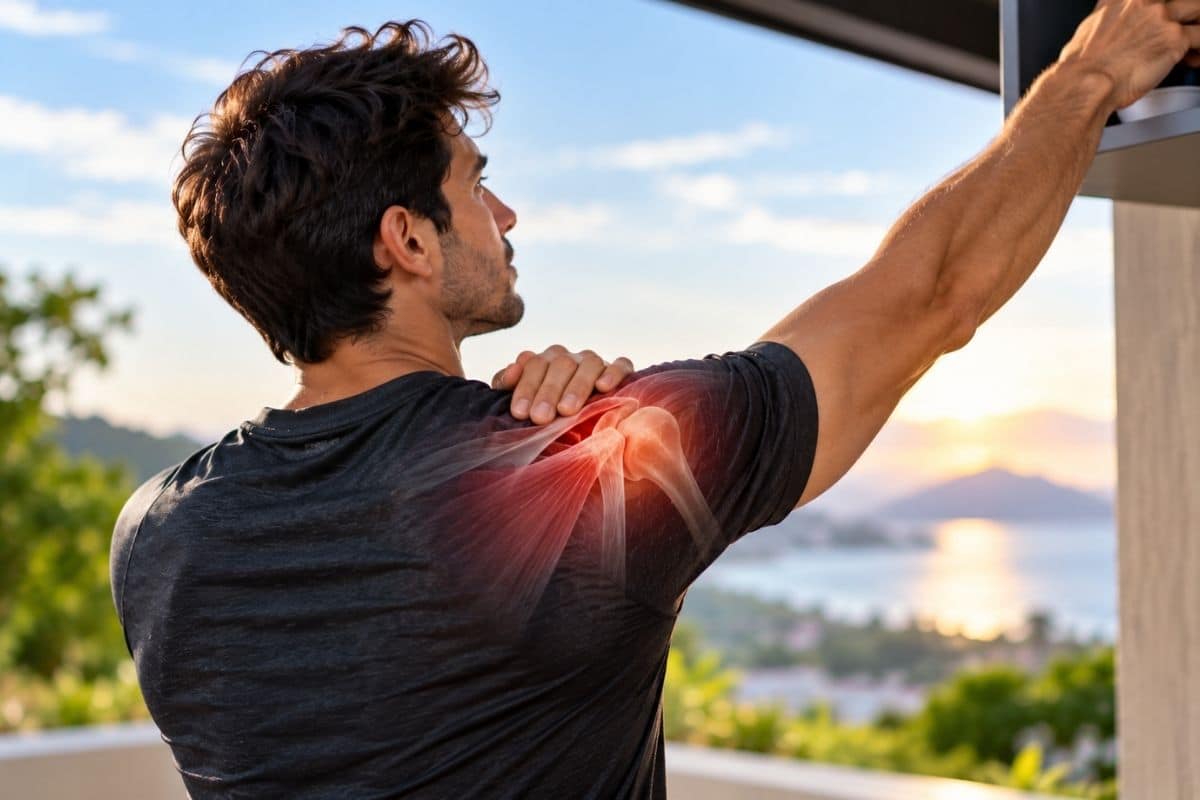
Months after rotator cuff repair, your strength may look good during controlled rehabilitation exercises. Yet reaching overhead in everyday life can still feel slightly awkward or uncertain.
A quick reach to catch something, reaching unexpectedly behind you, or moving the arm rapidly may produce discomfort or a sense that the shoulder is not quite moving as naturally as the other side.
This does not necessarily mean the repair has failed. Strength is only one part of shoulder recovery. Mobility, coordination, confidence, movement control and the ability to tolerate faster tasks may recover at different rates.
Why Strength Tests Do Not Tell the Whole Story
A controlled strength test is predictable. You know the direction of movement, the resistance and what your shoulder is being asked to do.
Everyday movement can be very different.
Reaching overhead requires coordinated movement between the upper arm, shoulder blade and surrounding muscles. Faster or unexpected movements also give your body less time to consciously prepare for the task.
Someone can therefore demonstrate good strength during testing while still finding certain real-world movements difficult.
What May Still Need to Recover?
The shoulder blade and upper arm normally move together during reaching and overhead activity. This coordinated movement is often described as scapulohumeral rhythm.
After surgery and a period of reduced movement, restoring strength is important, but rehabilitation may also need to progressively rebuild mobility, movement control and confidence across the activities you want to return to.
The exact recovery process varies considerably depending on the size and location of the original tear, surgical procedure, rehabilitation history, age and individual healing response.
Why Fast Movement Feels Different From Slow Exercise
Slow rehabilitation exercises allow you to concentrate on technique and control.
Faster movements require the shoulder to respond more quickly while multiple muscles coordinate around the joint. Sport, work and everyday life may also introduce directions and speeds that are difficult to reproduce with basic strengthening exercises alone.
This is why later-stage rehabilitation may include progressively more functional movements when appropriate and when cleared by the treating surgeon or rehabilitation professional.
Recovery Should Be Based on More Than Strength Alone
Returning to full activity after rotator cuff repair should not depend on one strength measurement.
Range of motion, symptoms, functional ability, movement quality and the specific demands of the activities you want to resume may all need consideration.
At Abbysan, a Foundation Assessment can explore shoulder mobility, strength and movement control as part of understanding how your shoulder currently performs.
If you have recently undergone rotator cuff surgery, rehabilitation progression should remain consistent with the guidance and restrictions provided by your surgeon and treating rehabilitation team.
Strength Is Important, but So Is How You Use It
A shoulder can become stronger before every movement feels completely natural again.
If controlled exercises feel good but faster or everyday reaching still feels uncomfortable, assessing the complete movement rather than strength alone may provide useful information about what still needs attention.
Look Beyond Shoulder Strength
Book a Foundation Assessment to explore your shoulder mobility, strength and movement control and better understand what may still need attention during your recovery.