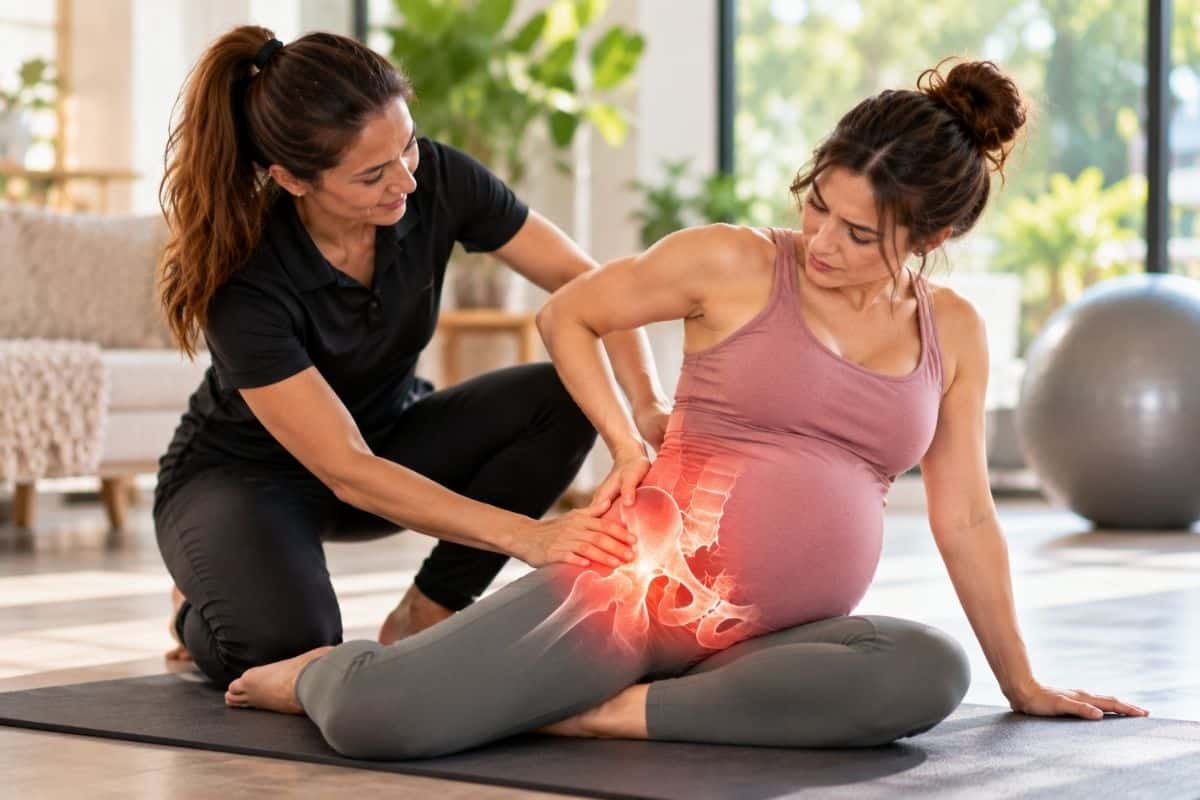
Pelvic girdle pain during pregnancy can make ordinary movements unexpectedly uncomfortable. Turning over in bed, climbing stairs, getting out of a car or standing on one leg to get dressed may trigger pain around the front of the pelvis, hips, groin or lower back.
Although pelvic girdle pain is relatively common during pregnancy, that does not mean it should simply be ignored or pushed through until delivery.
Pregnancy brings significant changes to posture, movement, load distribution and the tissues supporting the pelvis. Understanding how your body is responding to those changes can help you find safer and more comfortable ways to keep moving.
Why Does Pelvic Girdle Pain Develop During Pregnancy?
The pelvis is made up of several bones connected by joints and supported by ligaments and muscles. During pregnancy, hormonal changes — including increased relaxin and progesterone — contribute to changes in connective tissues as the body prepares for birth.
However, pelvic girdle pain is not explained by “loose ligaments” alone. Research suggests it is multifactorial, with changes in load, movement, muscle coordination, previous pain and individual physical factors potentially contributing.
This is why two women at the same stage of pregnancy can experience very different symptoms.
Why Everyday Movements Can Trigger Pain
Pelvic girdle pain is often particularly noticeable during asymmetrical activities.
Standing on one leg to put on clothing, taking stairs, getting in or out of a car and rolling over in bed can temporarily place different demands on each side of the pelvis.
As pregnancy progresses and your centre of mass changes, your body also adapts the way it stands, walks and transfers weight.
When certain movements consistently provoke symptoms, identifying and modifying those specific tasks can sometimes be more useful than simply trying to strengthen everything around the pelvis.
Reconnect the Pelvic Floor, Breath and Deep Core
The pelvic floor, diaphragm and abdominal wall work together as part of the system that manages pressure and supports movement through the trunk and pelvis.
The goal is not to brace these muscles as tightly as possible throughout the day. Excessive gripping can sometimes make movement feel even more restricted.
Instead, learning how to coordinate breathing with comfortable pelvic floor and abdominal activity can help create a more adaptable foundation for movement during pregnancy.
Look at How You Load Each Side
Pregnancy naturally changes balance and weight distribution, but persistent pain during walking, stairs or single-leg activities may make you favour one side.
Over time, avoiding the painful side can itself influence the way you move.
Guided movement work can explore how you transfer weight between your legs and whether small changes in stance, stride or movement strategy make everyday activities more comfortable.
Small Movement Changes Can Make a Difference
Management does not always mean performing more exercises.
Sometimes the first useful step is changing how you perform the movement that repeatedly aggravates symptoms — such as keeping the legs closer together when getting out of a car, modifying how you roll in bed, adjusting stride length or changing how you manage stairs.
The appropriate strategy depends on the individual, which is why pregnancy-related pelvic pain is better approached according to your specific symptoms and movement patterns rather than with one universal exercise program.
You Do Not Have to Simply Push Through It
Pelvic girdle pain may occur during pregnancy, but persistent pain deserves attention. The aim is not to eliminate every physical change associated with pregnancy, but to help you continue moving as comfortably and confidently as possible.
If pain is severe, suddenly worsening, associated with bleeding, contractions, fever, neurological symptoms or other concerning pregnancy symptoms, contact your maternity healthcare team promptly.
Move More Comfortably Through Pregnancy
If pelvic pain is making everyday movement difficult, arrange a one-on-one session with Denny to explore the Reconnect Method and find movement strategies appropriate for your pregnancy.