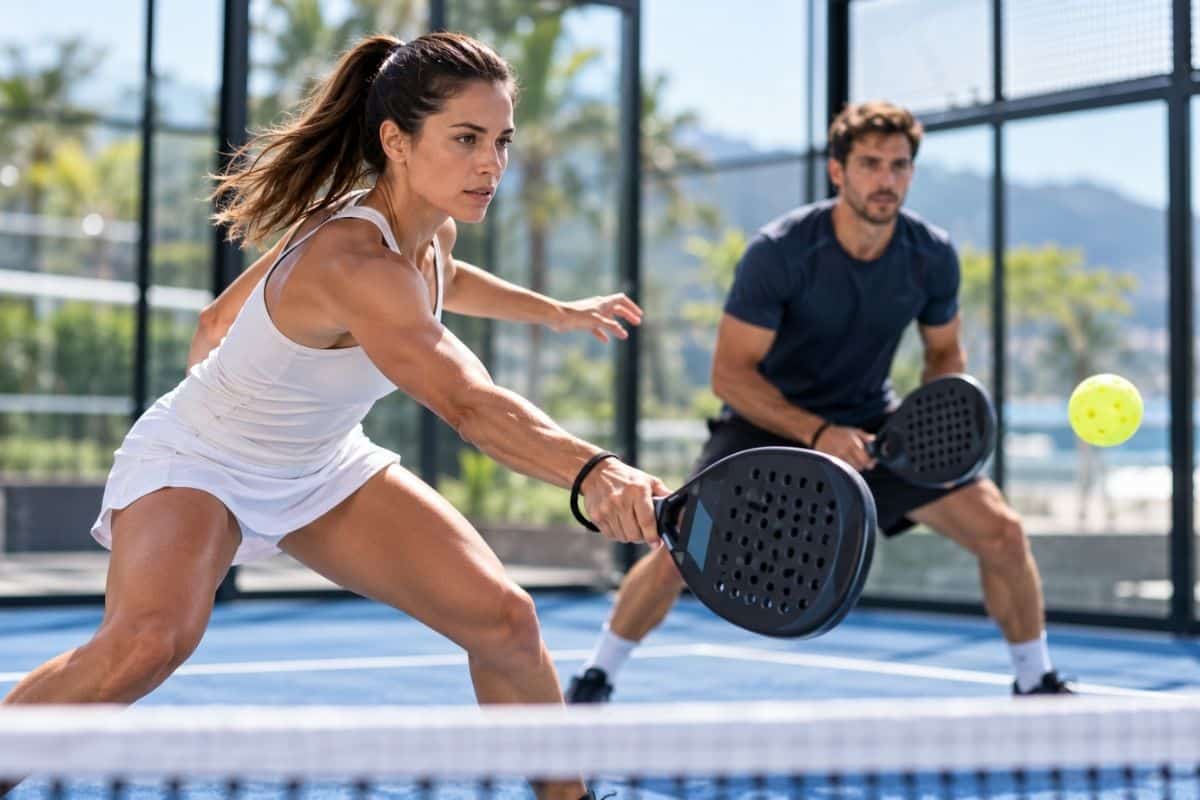
A rope strung between two points only frays where it repeatedly rubs against a fixed edge, never along the sections that hang free. It does not matter that the rope is thick and strong. What matters is the one point where friction repeats thousands of times without variation. Padel and pickleball are often recommended to people recovering from tennis elbow or knee pain because the courts are smaller and the pace feels gentler. That gentleness is real, but it does not remove friction from the joints. It relocates it.
Both sports involve a high volume of short, sharp direction changes in a compact space, far more per minute than tennis because the court is smaller and rallies happen at closer range. The shoulder, elbow, and knee do not experience fewer repetitions in padel or pickleball. They often experience more, just at lower individual force per repetition. A joint that has one point of friction, whether a slightly unstable knee or a shoulder with poor rotator cuff timing, will still fray at that exact point, simply over a longer timeline than it would in a higher-force sport like tennis.
This is why so many players who switch to padel or pickleball specifically to protect an old injury still end up with elbow pain, knee soreness, or shoulder catching within a season or two. The sport did not fail to protect them. It simply exposed the same existing weak point through a different pattern of repeated friction rather than eliminating friction altogether.
The First Area: Knee Stability During Lateral Movement
The first area to assess is knee stability during lateral and short-burst movement, since both sports demand rapid direction changes at short range that place significant rotational demand on the knee. A knee that lacks control in this specific pattern will wear down regardless of how gentle the sport appears from the sideline. The American Academy of Orthopaedic Surgeons also provides guidance on sports injury prevention and protecting the body during physical activity.
The Second Area: Elbow and Wrist Loading
The second area is elbow and wrist loading through the specific paddle or dink motion each sport uses, which differs meaningfully from a tennis swing. Padel’s compact, wristy shots and pickleball’s soft dinking motion both place repetitive stress through the forearm tendons in a pattern that traditional tennis elbow prevention advice does not fully address.
The Third Area: Shoulder Mechanics
The third area is shoulder mechanics during the frequent overhead and half-speed shots both sports require, checking whether the rotator cuff and shoulder blade muscles are sharing the load evenly or whether one structure is absorbing a disproportionate amount of the repeated motion.
Switching to a gentler sport is a reasonable strategy, but it protects a joint only when paired with an honest look at where that joint’s specific friction point actually is. Come see us for a movement assessment before your next season so we can find your friction point before the sport does.