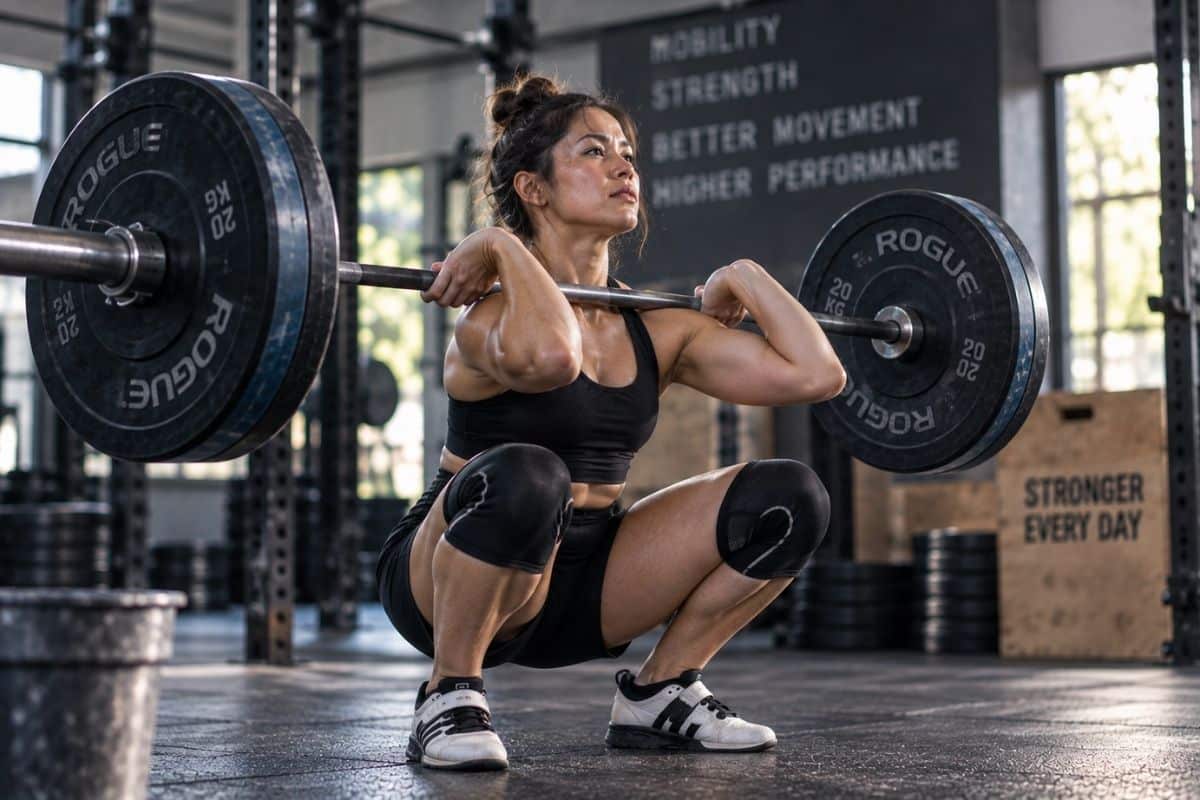
Your first few clean and jerks of the session look controlled. The front rack feels solid, and the overhead catch feels stable.
A few sets later, fatigue begins to build. Your wrist starts aching in the rack position, your shoulder feels uncomfortable overhead, or positions that felt natural at the beginning of the session become increasingly difficult to maintain.
Your coach may continue correcting your elbows or bar path, but Olympic lifting requires more than technique alone. Mobility, strength, coordination, training load and fatigue all influence your ability to maintain demanding positions.
Why Does Technique Break Down Under Fatigue?
Fatigue changes what your body can produce and control during a training session.
When you are fresh, you generally have greater strength and coordination available to maintain demanding positions. As repeated sets accumulate, those physical resources gradually decrease.
This can make an existing mobility or strength limitation more noticeable, but it does not automatically mean that every technique breakdown is caused by a hidden restriction.
Load, conditioning, technical skill and recovery can all contribute to what happens later in a session.
What Mobility Does Olympic Lifting Require?
The front rack position requires coordinated mobility through the wrists, elbows, shoulders and upper back. Individual anatomy, grip width and lifting technique also influence how much motion is required from each area.
The overhead position similarly depends on the shoulders, shoulder blades and thoracic spine working together while the athlete controls a loaded barbell.
If one area has limited comfortable range, the body may use a different strategy to achieve the position. Under heavier loads or increasing fatigue, that strategy may become harder to maintain.
Why Wrist Pain Can Appear in the Front Rack
During a front rack, the wrists may be placed into considerable extension, particularly when the bar is being supported more through the hands than across the shoulders.
Wrist discomfort does not necessarily mean that wrist mobility alone is responsible. Shoulder mobility, upper-back position, grip, technique and how the bar is supported can all influence the load experienced at the wrist.
Looking at the entire rack position can therefore be more useful than simply stretching the wrist.
Why Cueing Alone May Not Be Enough
Technical coaching is essential in Olympic lifting, and an appropriate cue can sometimes immediately improve a lift.
However, if the same position repeatedly deteriorates as fatigue increases, it may be useful to investigate whether strength, mobility or load tolerance is limiting your ability to maintain the technique.
At Abbysan, a Foundation Assessment can explore wrist, shoulder and upper-back mobility alongside strength and movement control to identify areas that may benefit from targeted attention.
Build the Capacity to Hold the Position
The goal is not simply to achieve a technically good position once while fresh. Olympic lifting requires enough capacity to repeatedly control demanding positions while managing increasing load and fatigue.
If your front rack or overhead position consistently changes later in training, that pattern provides useful information about what your body may need to develop next.
Find Out What Changes Under Fatigue
Book a Foundation Assessment to explore your wrist, shoulder and upper-back mobility, strength and movement control for the positions your Olympic lifting requires.