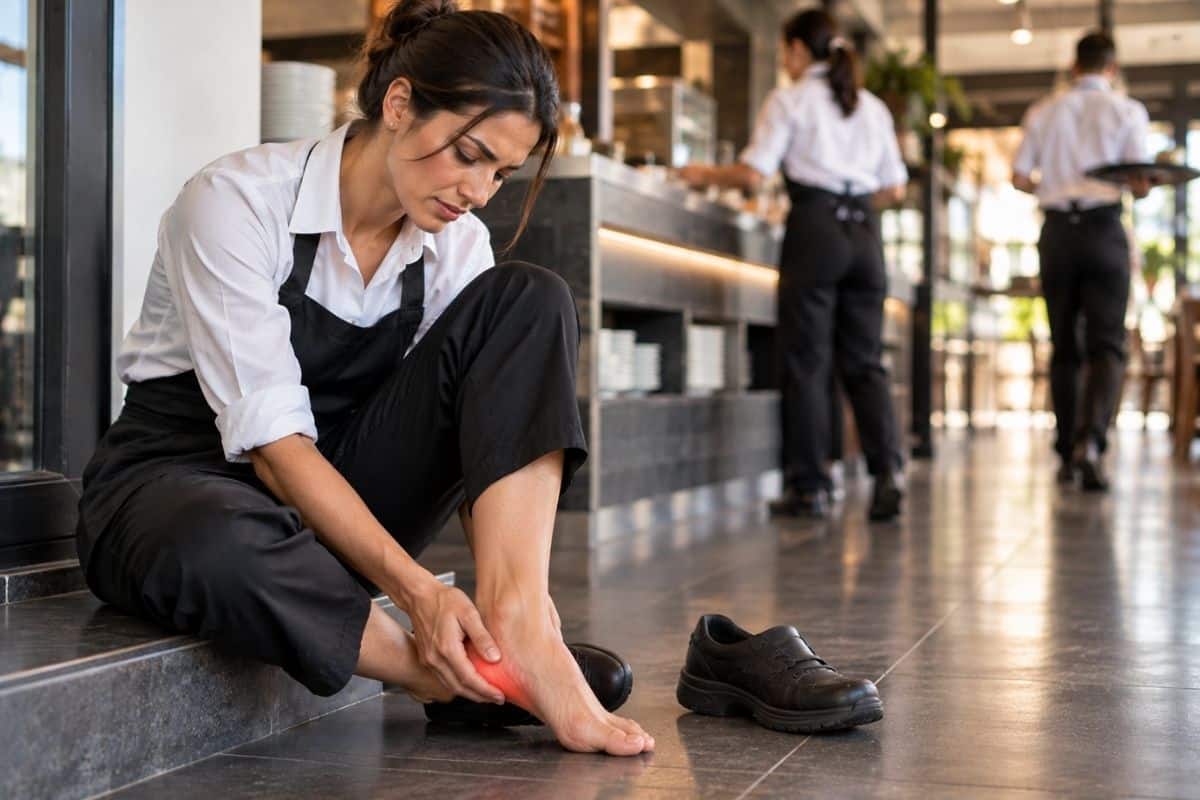
You have bought the supportive shoes, then upgraded to a more expensive pair, and perhaps added gel insoles as well.
Yet after a full shift standing on tile or concrete, your heels still ache and the arches of your feet feel tired or uncomfortable.
Footwear can make a meaningful difference to comfort, but persistent foot pain is not always explained by the shoes alone. How your feet manage prolonged standing, your workload, strength, mobility and the amount of movement throughout your day can all contribute.
Why Better Shoes May Help Without Solving Everything
Supportive and comfortable footwear can reduce pressure and improve comfort during long periods on your feet. For some people, changing footwear is enough to make a significant difference.
But shoes cannot address every possible contributor to recurring foot pain.
If symptoms continue across several appropriate pairs of shoes, it may be useful to look at the foot and ankle themselves, as well as how you stand, walk and distribute load throughout a shift.
What Happens During Hours of Standing?
The foot is a complex structure containing multiple joints, muscles, tendons and ligaments that work together while you stand and move.
Walking naturally changes pressure across the foot with each step. Prolonged standing provides less movement variation and can create sustained loading through particular areas.
Hard surfaces may also make long shifts feel more demanding, particularly when opportunities to sit, walk or regularly change position are limited.
However, persistent heel or arch pain should not automatically be attributed to joint stiffness. Several conditions and workload-related factors can produce similar symptoms.
Why Movement and Capacity Matter
Your feet need enough mobility, strength and load tolerance to manage the demands you place on them.
Ankle mobility, calf capacity and the way pressure moves through the foot can all be relevant when symptoms repeatedly develop during prolonged standing.
Rather than assuming that one specific joint is responsible, assessing the whole lower limb can provide a clearer understanding of what may be contributing.
Look Beyond the Shoe
If you have changed footwear several times without meaningful improvement, buying another pair may not answer the underlying question.
An individual assessment can examine foot and ankle mobility, strength, balance and movement patterns while also considering the demands of your working environment.
At Abbysan, a Foundation Assessment can help identify physical factors that may deserve attention when foot discomfort continues despite changes in footwear.
Your Feet May Need More Than Cushioning
Good footwear remains important, especially when your job keeps you on hard floors for many hours.
But recurring pain is a reason to consider the complete picture rather than continuing to judge the problem only by the shoes underneath your feet.
Find Out What Your Feet Actually Need
Book a Foundation Assessment to explore your foot and ankle mobility, strength and movement patterns and identify factors that may be contributing to discomfort during long shifts.