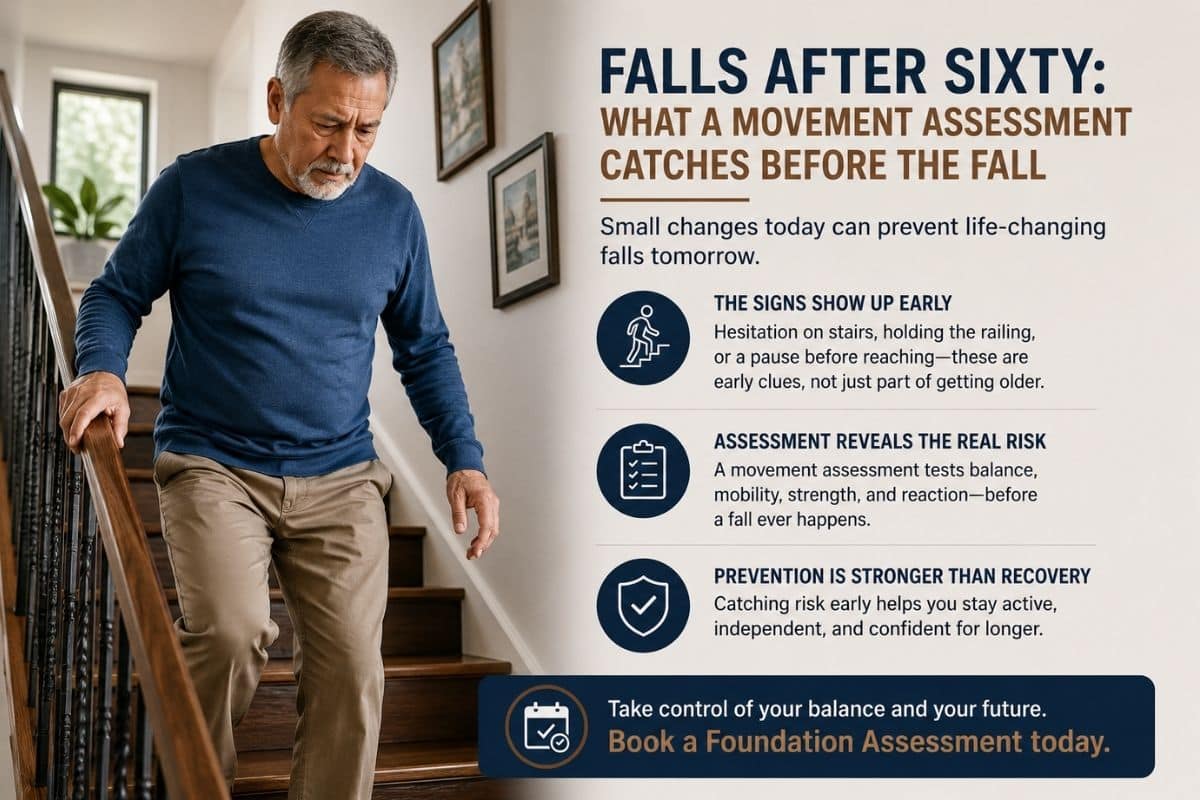
You have not fallen. Nothing dramatic has happened. But the stairs get a longer look before you take them now, reaching for something on a high shelf comes with a small pause to check your balance first, and you have started holding the railing every time, not just when the floor is wet.
None of this has been named a problem. Nothing has actually happened yet.
When you were in the womb, your body sat curled forward, folded into itself. In old age, without anything pushing back, it can gradually return toward that same shape.
Gravity does not pause while you wait for a reason to worry. The hesitation on the stairs, the pause before reaching, and the new habit of holding the railing may all be signs that balance, mobility or confidence are changing quietly over time.
Why the Arc Moves Long Before the Fall Does
A fall is rarely the first sign that movement capacity has changed. It is often the first dramatic confirmation of changes that may have been developing for years.
Hip mobility can gradually narrow. Ankle strength and stability can reduce with inactivity. Posture and confidence can also influence how comfortably someone responds when balance is challenged.
None of these changes necessarily hurt, which is one reason they can be easy to overlook.
The CDC highlights balance, strength, mobility and environmental factors as important considerations in reducing fall risk as people get older.
What a Movement Assessment Actually Catches
A movement assessment does not need to wait for an unexpected stumble to see how the body responds.
Instead, it can look at balance, weight transfer, ankle control, hip movement and how quickly the body responds when its centre of mass changes.
How does the ankle react when balance is gently challenged? How far does the hip rotate before another area starts compensating? How confidently does weight shift from one side to the other?
These findings can reveal areas that may need attention before they show up as a more obvious loss of balance in daily life.
Why Waiting for the First Fall Is the Wrong Test
A first fall is not just useful information. It can also lead to injury, reduced confidence and less movement afterwards.
That reduction in activity can make strength, balance and mobility harder to rebuild, especially if fear of falling begins to change everyday behaviour.
For that reason, preventive assessment can be more useful than waiting for a fall to confirm that something has already changed.
At Abbysan, a Foundation Assessment can help identify changes in balance, mobility and movement before they become more disruptive.
Read the Small Changes Before They Become Big Ones
If the stairs already get a longer look than they used to, that hesitation is worth paying attention to.
Small changes in balance confidence, mobility or stability can provide useful information long before a fall happens.
The goal is not to create fear around falling. It is to understand how your body is moving now, while there is still time to work on the areas that may be losing capacity.
Find Out Where Your Balance Stands
Book a Foundation Assessment to understand how your balance, mobility and movement confidence are changing before a fall forces the question.