Two people can look, on an ordinary Tuesday, almost identical. Both are active, both feel reasonably well, and neither is in any obvious pain.
Ten years later, one may still move through daily life with confidence and ease. The other may have gradually started bracing through stairs, getting up from the floor, reaching overhead, or movements that once felt automatic.
The difference between them may not have been obvious on that ordinary Tuesday. It can develop gradually through small changes in mobility, strength, balance and movement habits over many years.
Ageing naturally changes the body, but staying physically active and maintaining strength and mobility can help preserve function and independence as those changes occur.
Why the Two Paths Can Look the Same Day to Day
Small changes rarely announce themselves.
A hip may gradually lose some comfortable rotation. The upper back may become less mobile. Balance may feel slightly less automatic, or getting up from the floor may require a little more planning than it once did.
On any single day, these differences can seem too small to matter. Over years, however, small changes in physical capacity can accumulate and become much more noticeable.
The World Health Organization recommends regular physical activity throughout adulthood and later life, including activities that support strength, balance and overall physical function.
What Helps a Body Keep Moving Well With Age?
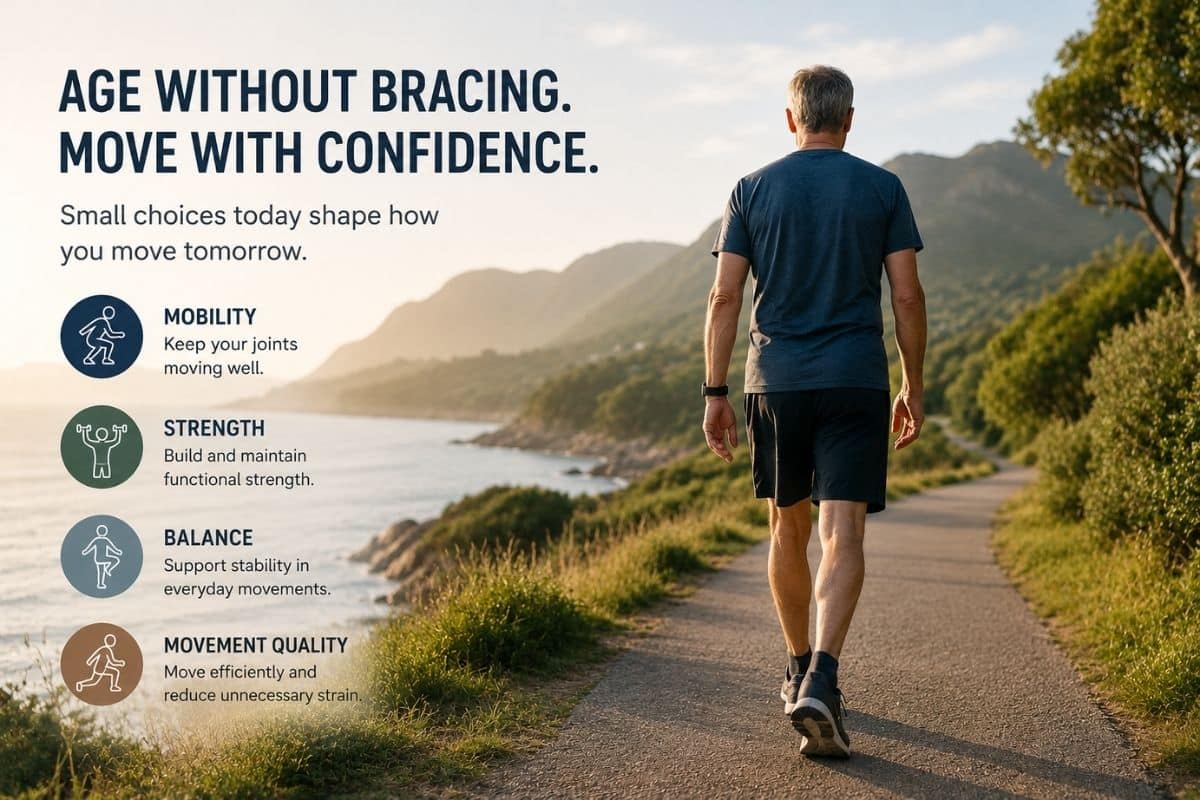
Ageing well is not simply about exercising harder. It is about maintaining enough strength, mobility, balance and movement variety to continue doing the things everyday life requires.
That can mean noticing when a previously comfortable movement starts becoming restricted rather than automatically adapting around it.
It can also mean developing strength across the body instead of repeatedly relying on the areas that already do most of the work.
Regular walking, resistance training, balance work and mobility exercises can all contribute to maintaining physical capacity as we age.
Why Prevention Happens in Small Increments
There is rarely one dramatic moment that determines how somebody will move ten years from now.
Instead, physical capacity develops through repeated choices: whether movement remains part of everyday life, whether strength continues to be challenged, and whether changes in balance or mobility receive attention when they first appear.
A stiff hip today does not automatically become a major problem later. But noticing the change gives you an opportunity to understand it rather than simply building new movement habits around the restriction.
At Abbysan, a Foundation Assessment can provide a clearer picture of current mobility, balance, strength and movement patterns before pain becomes the reason to investigate them.
Build Capacity Before You Need It
The aim of preventive movement care is not to fight ageing or promise that the body will never change.
It is to preserve as much useful physical capacity as possible so everyday movements continue to require less conscious effort.
Stairs, getting up from the floor, carrying something heavy and reaching overhead all depend on physical abilities that can be maintained and trained.
The direction your body takes over the coming years is shaped partly by what you continue asking it to do today.
Understand How Your Body Is Ageing
Book a Foundation Assessment to explore your current mobility, balance, strength and movement patterns and identify areas that may benefit from attention now.