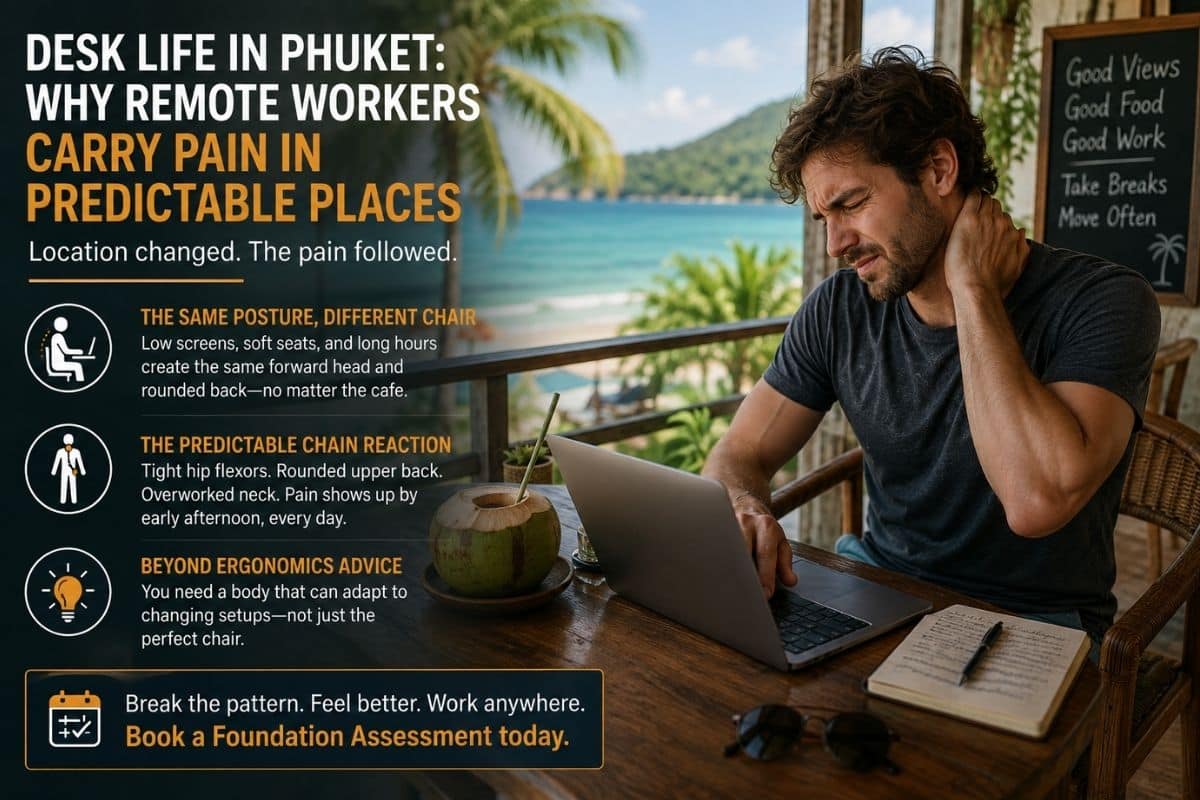
You moved here for the version of work that happens with a laptop on a cafe balcony, a swim before the calls start, and no fixed desk chaining you to one building.
Somewhere between the flexible schedule and the view, your neck started aching by early afternoon, your hip flexors began feeling locked by evening, and a dull ache settled into your upper back that never showed up in your old office job.
The location changed completely. The pain followed you anyway.
The body works as a chain. When one area holds the same position for hours, the areas above and below it often adapt to keep you functioning.
Why No Fixed Desk Does Not Mean No Fixed Posture
A rotating mix of cafe chairs, sofas, poolside loungers and laptops balanced on your knees can still create the same basic demand on the body.
The screen often sits below eye level, encouraging the neck to move forward. The hips remain flexed for long periods, while the upper back gradually rounds to bring your eyes closer to the screen.
The furniture may change every day, but the position your body repeatedly adopts can stay surprisingly similar.
The OSHA computer workstation guidance highlights the importance of screen position, sitting setup and regular movement when reducing physical strain during computer work.
The Predictable Pattern Remote Workers Can Develop
Long periods of sitting can reduce movement through the hips and encourage the hip flexors to stay in a shortened position for much of the day.
The upper back may round forward while the muscles around the shoulder blades work harder to support that position.
The neck then adapts again to keep your eyes on the screen, which can add more load to the muscles around the upper shoulders and cervical spine.
These changes rarely appear as pain on the first day. They tend to build gradually until the same areas start aching at roughly the same time each afternoon.
Why Generic Desk-Ergonomics Advice Does Not Always Solve It
Most ergonomic advice assumes you have one desk, one chair and one monitor that can be adjusted once and left in place.
Remote workers and digital nomads often work in several different environments during the same week.
That means the solution cannot rely entirely on perfect furniture. Your body also needs enough mobility, strength and movement variety to tolerate changing setups without repeatedly falling into the same compensation pattern.
At Abbysan, a Foundation Assessment can help identify which areas are becoming restricted, which muscles are overworking, and how your body responds to long periods of sitting and screen use.
Read the Pattern, Not Just the Chair
If your neck, hips and upper back ache in roughly the same pattern most days, the problem may be bigger than whichever chair you happened to choose that morning.
The more useful question is what position your body keeps returning to, how long it stays there, and which parts of the movement chain are compensating for it.
Once that pattern is clear, the goal becomes more than simply finding a better chair. It becomes helping your body handle a day of changing workspaces with less strain.
Find Out What Your Body Needs for Desk Life
Book a Foundation Assessment to understand the movement, mobility and postural patterns behind recurring neck, hip and upper-back discomfort during remote work.