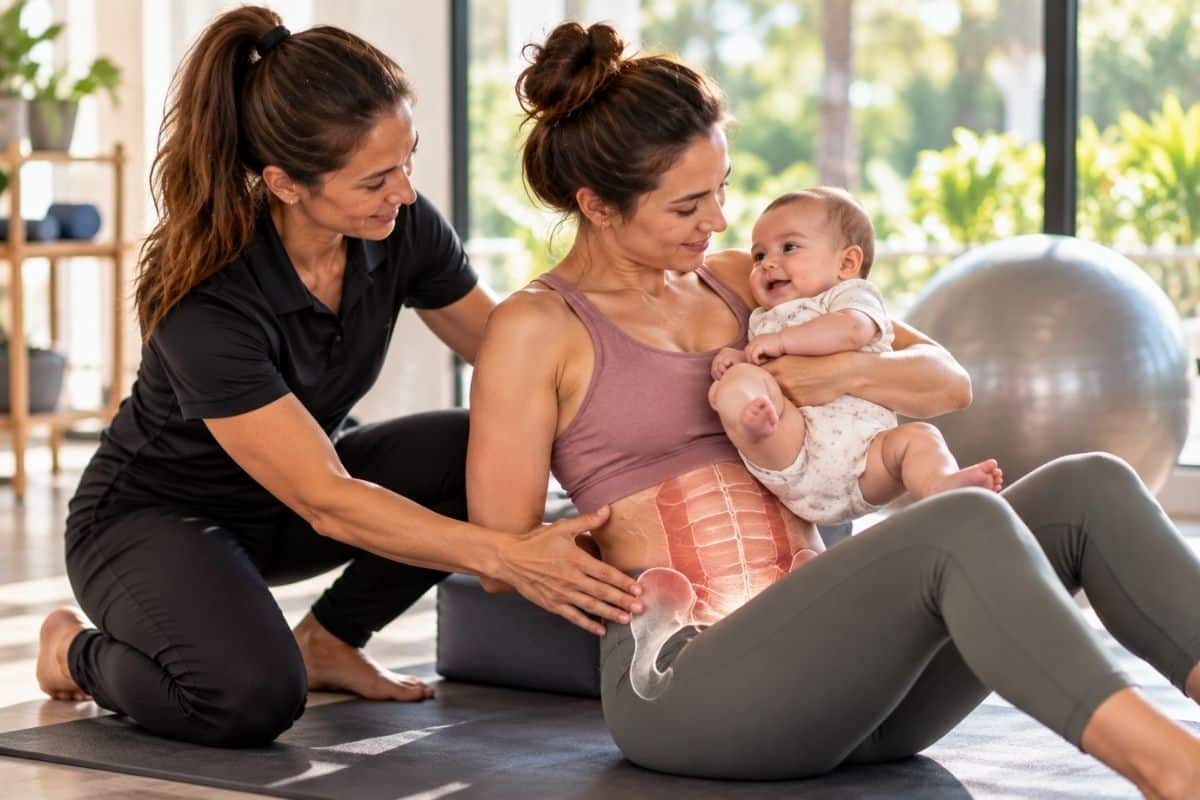
A house does not rebuild its foundation simply because enough time passes after a crack appears. The structure needs time to settle and heal, but it may also need appropriate support before it can confidently carry load again.
Recovery after a cesarean section can be similar. The early weeks are important for tissue healing, but healing alone does not automatically restore abdominal strength, pelvic floor coordination, hip control or confidence with everyday movement.
Pregnancy itself changes how the abdominal wall, diaphragm, pelvic floor and hips manage pressure and movement. A C-section then adds abdominal surgery to that recovery process. This is why postpartum rehabilitation may need to address more than the incision alone.
Why Time Alone Does Not Restore Core Function
During pregnancy, the abdominal wall stretches considerably and the way pressure is managed through the trunk changes. Following a cesarean birth, the body also needs to recover from an incision through several layers of abdominal tissue.
It is important to clarify that the abdominal muscles themselves are generally separated rather than simply “cut through” during a typical C-section. However, surgery, pregnancy, pain and reduced activity can still affect strength, sensation and how confidently those muscles are recruited afterward.
Once the incision has healed, the next stage is not necessarily about doing harder abdominal exercises. It is about gradually restoring coordinated movement and load tolerance.
Reconnect Breath, Core and Pelvic Floor
The diaphragm, abdominal wall and pelvic floor work together to manage pressure through the trunk during breathing and movement.
After pregnancy and abdominal surgery, some women may find this coordination feels unfamiliar. They may brace excessively, hold their breath during effort or struggle to feel the deeper abdominal muscles working comfortably.
Relearning relaxed breathing alongside gentle abdominal and pelvic floor coordination can provide a foundation before progressing to more demanding strengthening exercises.
Why Hip Movement Also Matters
Pregnancy and the postpartum period can influence the way you stand, walk, carry your baby and transfer weight from one leg to another.
Scar sensitivity or restriction may also affect how comfortable certain movements feel, although scar tissue does not automatically cause hip dysfunction.
Instead of assuming the scar is responsible for every restriction, an individual assessment can explore hip mobility, strength, balance and how the trunk and pelvis work together during everyday movement.
Return to the Movements Motherhood Actually Requires
Postpartum recovery eventually needs to translate into real life.
Picking up your baby, carrying a car seat, getting up from the floor, bending over a cot and eventually returning to exercise all place increasing demands on the abdominal wall, pelvic floor and hips.
These activities can be progressively reintroduced as healing allows, rather than jumping immediately from rest into demanding core workouts.
Build the Foundation in the Right Sequence
A structured recovery process may begin with breathing and gentle coordination, progress into strength and movement control, and eventually build toward the specific activities you want to return to.
The timeline will be different for every mother and should take into account healing, symptoms, birth experience and medical guidance.
If you experience increasing pain, wound concerns, unusual bleeding, pelvic heaviness, significant urinary or bowel symptoms, or other concerning symptoms after a C-section, speak with your obstetric or healthcare team before progressing exercise.
Reconnect Your Core After C-Section Recovery
If your core, pelvic floor or hips still do not feel connected after childbirth, arrange a one-on-one session with Denny to explore the Reconnect Method and build your recovery progressively.