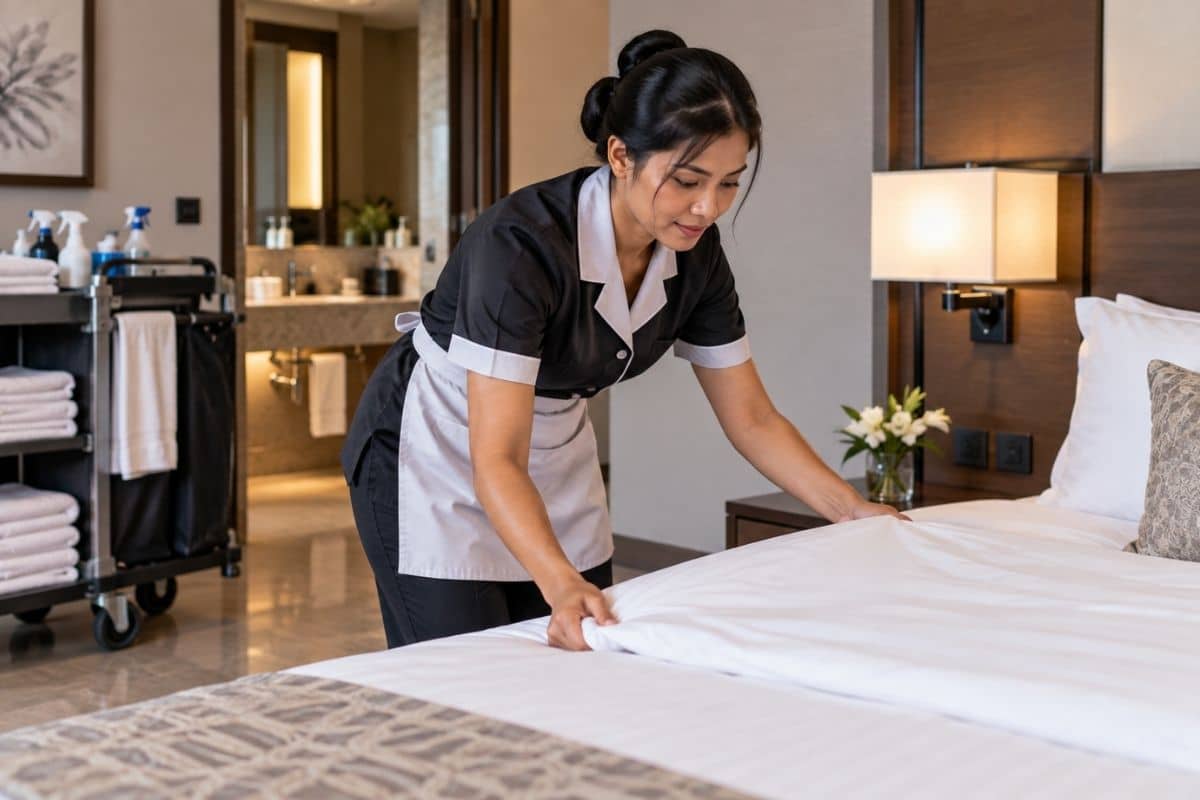
Stripping and remaking a dozen or more beds a day, bending into bathtubs, kneeling to clean low corners, and vacuuming room after room can place demands on almost every part of the body.
By the end of a shift, your lower back may ache, your shoulders may feel tired, and your knees may become uncomfortable. Unlike jobs dominated by one position, housekeeping requires the body to repeatedly change between bending, reaching, kneeling, lifting and twisting.
That variety makes strength, mobility, physical capacity and recovery particularly important.
Why Housekeeping Creates a Different Physical Demand
Housekeeping is rarely one repetitive movement performed in isolation.
Making beds involves reaching and bending. Cleaning bathrooms can require kneeling, squatting and working in confined positions. Vacuuming introduces repeated pushing, pulling and turning, while moving supplies adds another lifting and carrying demand.
Each task may be manageable individually. Across a full shift, however, the accumulated workload can become significant.
What Does the Body Need to Handle This Work?
Housekeeping requires useful physical capacity across several areas rather than strength in only one movement.
The hips and knees help manage repeated lowering and rising. The trunk contributes during bending, lifting and turning, while the shoulders and upper back are repeatedly involved in reaching, pulling and making beds.
If one task consistently feels more difficult than the others, it may provide useful information about an area where strength, mobility or load tolerance could be improved.
Why Pain Can Appear in Different Places
Symptoms that vary between the lower back, shoulders and knees do not necessarily mean that one hidden restriction is responsible for everything.
The tasks performed that day, the number of rooms completed, working height, fatigue, previous injuries and recovery between shifts can all influence where discomfort appears.
Looking at when symptoms develop and which activities consistently provoke them can therefore be more informative than simply focusing on the body part that hurts most at the end of one particular day.
Why Stretching the Sore Area May Not Be Enough
Stretching can feel helpful after a physically demanding shift, but recurring occupational discomfort may require a broader approach.
Strength, mobility, movement strategies, workload and opportunities to vary positions throughout the day may all deserve consideration.
At Abbysan, a Foundation Assessment can explore how your body manages bending, reaching, kneeling and other movement demands and identify areas that may benefit from targeted attention.
Build Capacity for the Job You Actually Do
Housekeeping is physically demanding work. Feeling tired after a busy shift is understandable, but recurring pain does not simply have to be accepted as part of the profession.
Understanding which tasks are most demanding for your body can provide a clearer direction for developing the strength, mobility and capacity needed for the work.
Understand What Your Work Is Asking of Your Body
Book a Foundation Assessment to explore your strength, mobility and movement patterns across the bending, reaching, kneeling and lifting demands of housekeeping work.
