A dull ache behind or around the kneecap, worse going down stairs than up them, and more noticeable after a long run than a short one.
You have rested it, iced it and stretched your quads. The discomfort settles, but within a week or two of returning to training, it appears again in exactly the same area.
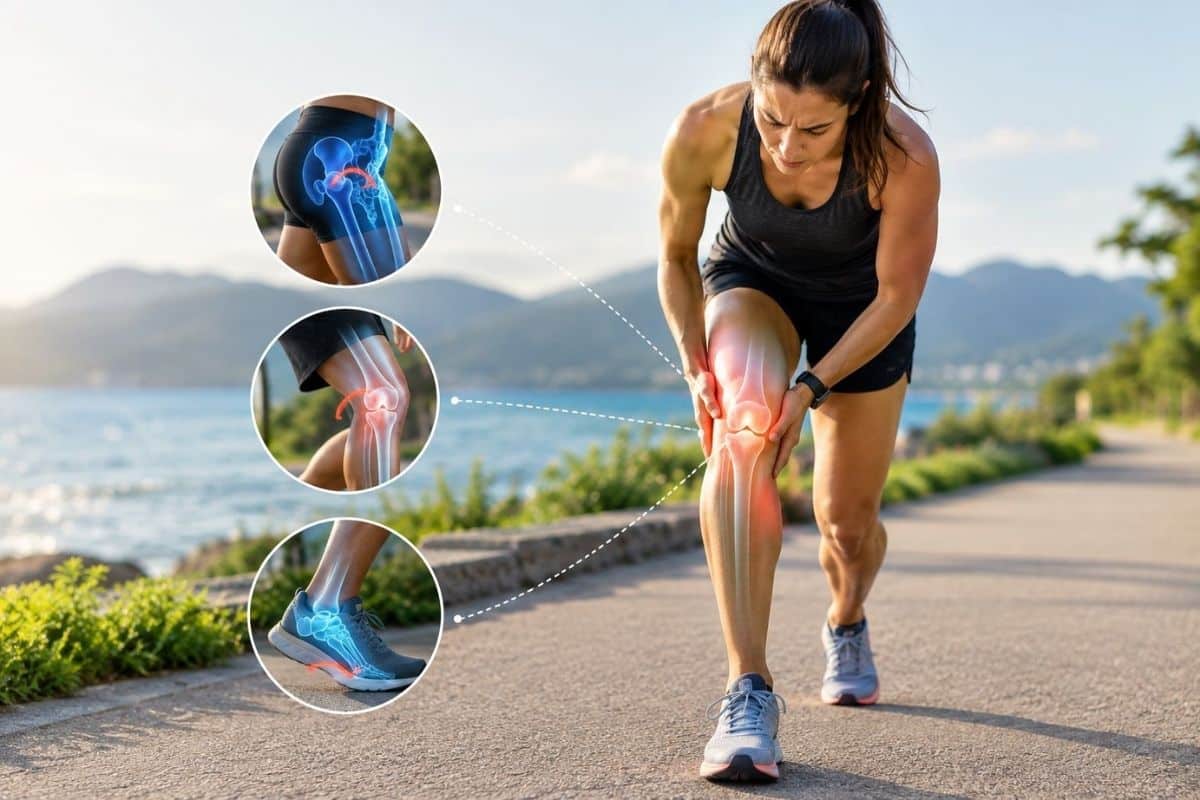
Runner’s knee, often described as patellofemoral pain, can be influenced by several factors. The knee may be where the symptoms appear, but understanding what is happening at the hip, knee and foot during movement can provide a more complete picture.
Why Does the Kneecap Take the Blame?
The kneecap, or patella, sits at the front of the knee and moves within a groove at the end of the thigh bone as the knee bends and straightens.
Running repeatedly loads this area. Changes in training volume, muscle capacity and movement mechanics can all influence the stress placed around the kneecap.
This means pain around the patella does not automatically tell you why the problem developed. The way the entire lower limb manages load may also be relevant.
What Could Be Driving It?
Hip strength and control can influence the position of the thigh during running. If the hip struggles to manage movement effectively during single-leg loading, the mechanics at the knee may also change.
The foot and ankle matter too. How the foot interacts with the ground and how the lower limb absorbs and transfers force can influence loading further up the chain.
These factors are particularly important in running because the same movement is repeated thousands of times. A small difference in load management may become increasingly noticeable as training volume rises.
Why Rest and Ice May Not Be Enough
Reducing training can give an irritated knee time to settle. Ice may also provide temporary symptom relief for some people.
However, if the pain repeatedly returns when running volume increases, it may be useful to look beyond symptom relief and consider training load, strength, mobility and movement mechanics.
Rather than assuming one specific muscle or joint is responsible, an assessment can help identify which factors are most relevant to your individual running pattern.
Why the Assessment Should Look Beyond the Knee
Examining single-leg control, hip strength, foot and ankle function, and the way the lower limb manages load can provide useful information when kneecap pain keeps returning.
A comprehensive assessment should still include the knee itself. Persistent knee pain can have different causes, so it is important not to assume that every case of runner’s knee originates from the hip or foot.
At Abbysan, a Foundation Assessment can help examine how different parts of your movement chain are working together and identify areas that may benefit from targeted rehabilitation.
Find Out What Is Contributing to Your Knee Pain
If your kneecap pain repeatedly settles with rest but returns when you start running again, it may be time to understand what happens when your body is placed back under load.
The goal is not simply to quiet the painful area. It is to understand the factors contributing to it and build the capacity required for a more confident return to running.
Look Beyond the Kneecap
Book a Foundation Assessment to explore how your hip, knee, foot and overall movement pattern may be influencing recurring pain during running.
