When a client comes in with tight shoulders, a rounded upper back, or chronic neck tension, the first instinct is to stretch the tight muscles and strengthen the weak ones. It’s reasonable. It’s what the training taught.
But if that’s all you do, the tightness comes back usually within a session or two.
The reason is almost always the same: no one looked at the breathing.
Breathing sets the position of everything
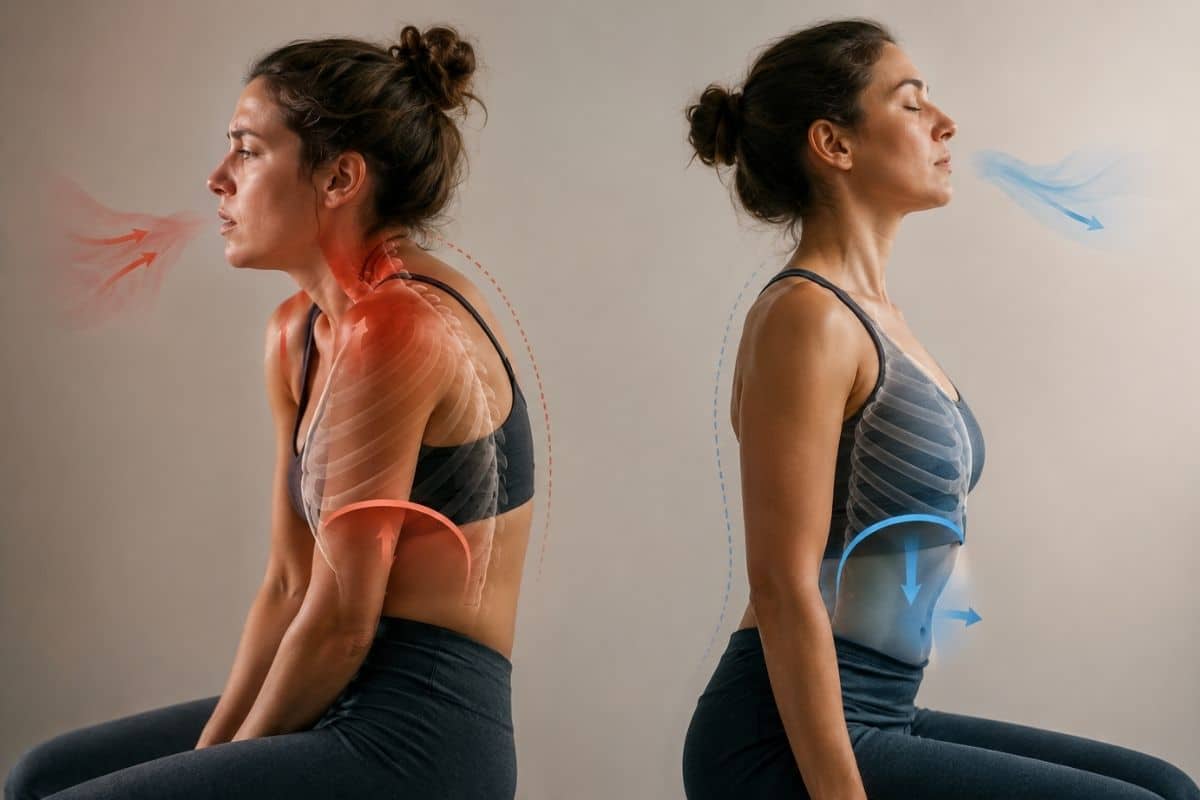
Here’s a way to feel this immediately. Take a shallow breath into your chest and hold it slightly. Notice what happens to your shoulders — they rise. Your ribs flare. Your neck tightens. Your lower back arches slightly.
Now exhale fully and breathe low into your belly. Feel the shoulders drop, the neck soften, the ribcage settle.
That shift — from one breath to the other — changes the resting position of almost every structure in the upper body. And if a person spends their waking hours in a chest-led breathing pattern, those elevated, forward positions become their baseline. Muscles adapt to hold that shape. Joints settle into it. The nervous system learns to call it normal.
No amount of stretching changes a posture that’s being actively maintained by the breathing pattern driving it.
Why this shows up everywhere
Chest-led breathing is more common than most practitioners realise. Stress drives it. Desk posture drives it. Pain drives it — because shallow breathing guards the area that hurts. Even a lot of yoga breathing cues inadvertently encourage it.
Once you start looking for it, you’ll find it in the majority of clients with postural complaints. The tight upper trapezius, the persistent thoracic kyphosis, the neck that keeps going back to the same place no matter how much it’s stretched — breathing is behind most of them.
It’s also behind a surprising number of lower body issues. A restricted diaphragm changes intra-abdominal pressure, which changes how the pelvis loads, which changes how the hips and knees move. The chain runs further than most people expect.
What to do with this
The first step is simply to observe. Before you programme a single exercise, watch your client breathe — without cueing them to change it. Where does the movement go? Chest, belly, or both? Does one side expand more than the other? Do they hold their breath when they move?
What you see tells you whether the breathing pattern is contributing to the pattern you’re treating. Often it is.
From there, breathing re-education becomes part of the session — not as a standalone add-on, but as the foundation that makes everything else work better. When the breath changes, posture follows. When posture follows, the exercises you were already using start to hold.
This is one of the first things I cover in the Movement Decision System — because it changes how you read every client who walks through the door.
If you haven’t explored it yet → abbysan.com/movement-decision-system/
Dr. Abhishek Agrawal is a Clinical Movement Specialist based in Phuket, Thailand.
